5 Best Car Coatings for UV Protection in Desert Heat
Last Updated: October 25, 2026
Quick Summary
Car coatings UV protection work by creating a barrier between the clear coat and the environment, absorbing and reflecting UV rays before they reach the paint. Guardian Automotive Coatings' Hybrid Resin Coating delivers up to 20 times more UV protection than ceramic coatings and maintains greater than 99% integrity after 2,000 hours of UV and moisture exposure.
- Guardian Hybrid Resin Coating maintains 99.8% gloss retention after extended UV exposure in hot climates.
- Professional ceramic coatings last 3-5 years in moderate sun with covered parking, but only 18-30 months in high-sun outdoor conditions.
- Paint protection film lasts 5-10 years and offers superior durability where applied, though ceramic provides broader coverage at lower cost.
- Water beading loss is the earliest reliable sign a coating needs reapplication; inspect every few months in high-sun regions.
- Wash every two weeks in hot climates and apply maintenance spray every 3-4 months to maximize coating longevity.
Table of Contents
- How UV Exposure Damages Automotive Paint and What Coatings Prevent
- Comparison Table: Top Car Coatings for UV Protection
- Does Ceramic Coating Protect Car Paint from UV Rays
- Ceramic Coating vs Paint Protection Film for UV Defense
- How Long Does Ceramic Coating Last Under Intense Sun Exposure
- Car Coating Maintenance in Hot Weather Climates
- Guardian Hybrid Resin Coating: Superior UV Protection Alternative
- Choosing the Right UV-Protection Coating for Your Vehicle
- Frequently Asked Questions
How UV Exposure Damages Automotive Paint and What Coatings Prevent
Ultraviolet radiation from direct sunlight is the single largest threat to automotive paint. UV rays penetrate the clear coat and break down the resin binders holding pigments together, causing oxidation, fading, and a dull, chalky appearance.
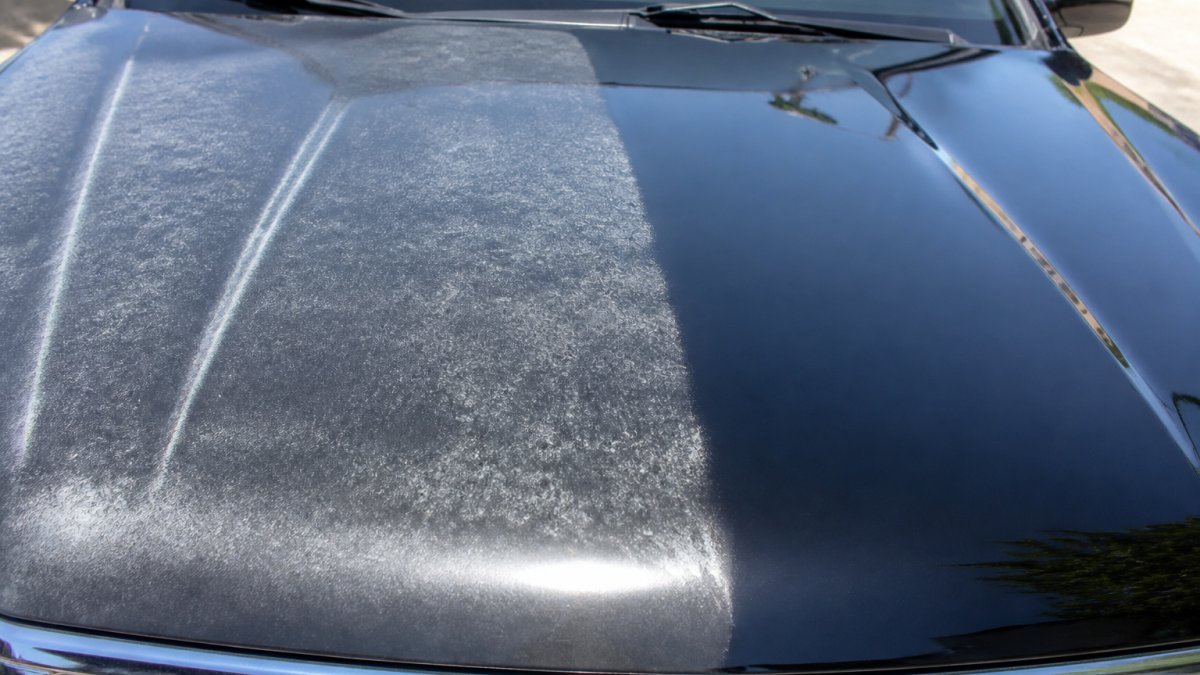
Protective coatings create a barrier between the clear coat and the environment, absorbing and reflecting UV rays before they reach the paint.
Guardian Automotive Coatings addresses this with a Hybrid Resin Coating that maintains greater than 99% integrity after 2,000 hours of UV and moisture exposure.
Comparison Table: Top Car Coatings for UV Protection
Coating Type | UV Protection Level | Durability | Best For | Reapplicability |
|---|---|---|---|---|
Guardian Hybrid Resin | Extreme (99%+ integrity at 2K hours) | 10+ years | Outdoor vehicles, luxury cars | Yes, repairs allowed |
Ceramic Coating (Professional) | High | 3-5 years | Daily drivers, moderate exposure | Limited |
Ceramic Spray Coating | Moderate | 6-12 months | Budget-conscious owners | Yes, easy reapply |
Paint Protection Film | Very High (physical barrier) | 5-10 years | High-impact areas | Replaceable sections |
Traditional Wax | Low | 3-6 months | Maintenance-focused owners | Yes, frequent reapply |
Does Ceramic Coating Protect Car Paint from UV Rays
Yes, but the honest answer is more nuanced than most product pages admit. Ceramic coatings can slow UV-driven clear-coat degradation, yet "UV protection" is used loosely, so buyers should understand what is actually being claimed.
What manufacturers mean by "UV protection"
In this market, "UV protection" usually refers to one or more of the following, which are not interchangeable:
- UV absorbers added to the coating chemistry. These molecules absorb ultraviolet energy and dissipate it as low-grade heat before it reaches the clear coat, the most direct form of protection, and the mechanism most worth asking a manufacturer about.
- UV-stable resins. The coating's polymer backbone resists breaking down under sunlight, so the coating lasts longer. This protects the paint indirectly by keeping a barrier in place, but does not necessarily block UV from reaching the clear coat.
- Sacrificial barrier. Any durable film on top of the paint reduces direct exposure simply by being there. Wax, sealant, and ceramic all do this to some degree; the difference is how long the barrier lasts.
A coating can be excellent at one mechanism and weak at another. "UV protection" on a label tells you almost nothing until you know which mechanism is doing the work.
How UV protection is actually tested
No single government or industry standard certifies a consumer car coating as "UV protective." Instead you'll see accelerated weathering tests, most commonly ASTM G154 (fluorescent UV lamps) or ASTM G155 (xenon-arc lamps), which simulate sunlight, heat, and moisture cycling in a lab; SAE J2527 and SAE J2412 are also used.
These tests are useful, but read the fine print:
- Hours are not years. A "2,000-hour" result is an accelerated lab figure, not a promise of 2,000 hours of real sun. Test conditions, lamp type, and pass/fail criteria vary widely between labs.
- What is being measured matters. Gloss retention, color change (Delta E), and coating integrity are different endpoints. A coating can hold gloss while still letting UV through to the clear coat.
- Independent verification is rare. Most published numbers come from the manufacturer's own lab or a contracted lab. Ask whether results were third-party verified and what the control sample was.
Where ceramic coatings genuinely help, and where they don't
Ceramic (SiO2-based) coatings excel at repelling water, resisting wash-induced marring, and holding gloss, and a UV-stable ceramic resin will outlast a cheap wax by years. That is real, measurable value.
What ceramic does not reliably do is block UV at the clear-coat level unless UV absorbers are specifically formulated in. Many consumer spray ceramics are primarily hydrophobic top-coats with limited UV chemistry.
A practical way to judge a coating's UV claim
- Look for a named UV absorber or UV-stable resin system, not just the word "UV" in the product name.
- Ask for the test method and endpoint (ASTM G154/G155, gloss retention vs. color change vs. integrity).
- Match the product to exposure. A garage-kept daily driver and a vehicle parked in full sun all day have very different UV loads; the second needs a coating with documented UV chemistry, not just strong beading.
Ceramic coating is a legitimate part of a UV-defense strategy, but it is not a magic shield, and the strongest claims deserve the most scrutiny.
Ceramic Coating vs Paint Protection Film for UV Defense
Both ceramic coatings and paint protection film (PPF) offer UV protection through entirely different mechanisms suited to different needs.
Paint protection film is a physical barrier, a clear, self-healing polyurethane layer applied over vulnerable areas like the hood, bumper, and door edges.
For UV protection specifically, both work, but ceramic provides broader coverage at lower cost while PPF offers superior durability where it's applied.
How Long Does Ceramic Coating Last Under Intense Sun Exposure
Durability is where marketing and reality diverge most. A coating's lifespan isn't a single number, it's the product of chemistry, surface prep, climate, parking, washing habits, and inspection. Owners who understand those variables get far more realistic value than those who anchor on a label.
Realistic lifespan ranges by product type
These are typical practitioner ranges for vehicles that see meaningful sun exposure, not best-case garage-queen figures:
- Professional multi-layer ceramic (9H-type): roughly 3-5 years in moderate sun with covered parking; closer to 18-30 months in high-sun, fully outdoor conditions before noticeable gloss and beading loss.
- Consumer spray ceramic (SiO2 spray): 3-6 months in strong sun, up to 12 months with regular maintenance toppers.
- Wax: 4-8 weeks in high heat and sun; 3-6 months in milder conditions.
Treat these as planning ranges, not guarantees. A coating applied over poorly prepped paint can fail in months regardless of its rated lifespan.
What actually shortens coating life in the sun
- Surface prep failures. Coating over contamination, swirls, or old wax traps defects and gives the coating nothing to bond to, prep is the single biggest determinant of real-world durability.
- Heat cycling. Repeated expansion and contraction stresses the coating-paint interface, especially on vehicles that sit in direct sun all day and cool sharply at night.
- Wash chemistry. Alkaline or harsh detergents strip the hydrophobic top layer faster than pH-neutral, coating-safe shampoos.
Inspection cues: how to know it's time to reapply
Don't wait for visible paint damage. Check these signals every few months:
- Water behavior. If water stops beading and starts sheeting or pooling flat, the hydrophobic layer is fading. This is the earliest reliable cue.
- Gloss under angled light. Inspect the hood and roof at a low angle in sunlight. A dulling or hazy shift means the coating is thinning.
- Bag test. Slip a thin plastic bag over your hand and run it across a clean panel. Gritty drag indicates bonded contamination that needs decontamination before you judge the coating.
- Sheeting after wash. If the panel stays wet in patches after a rinse, the coating is losing its release properties.
- Visible micro-cracking or patchiness. On horizontal surfaces, this is a late-stage sign, reapply or have it professionally corrected.
Reapplication and maintenance cadence
- Spray ceramics and sealants: plan to reapply seasonally in high-sun regions; a maintenance topper every 2-3 months extends the base layer.
- Professional ceramic: expect a decontamination wash every 3-4 months and a professional inspection annually. Many installers offer an annual maintenance service that resets the top layer and preserves the warranty.
- PPF: inspect edges and high-impact zones annually; film can usually be replaced panel-by-panel rather than whole-vehicle.
Climate and parking adjustments
- Full outdoor parking, high sun: shorten every range above by roughly a third and add a maintenance topper cadence.
- Carport or covered parking: ranges hold closer to the middle of the band.
- Garage-kept: expect the upper end of each range, with UV exposure driven mainly by driving time.
A coating is a wear item, not a permanent fixture. Owners who get the most from one inspect on a schedule, maintain the top layer, and reapply based on observed performance rather than a calendar printed on a box.
Car Coating Maintenance in Hot Weather Climates
Maintaining a protective coating in hot weather requires a different approach than standard car care, since heat accelerates coating breakdown and preventive maintenance becomes critical.
Wash every two weeks instead of monthly, in intense heat, dust, bird droppings, and road salt bond more aggressively, and regular washing removes them before they etch through the coating. Use pH-neutral soap designed for coated vehicles; harsh detergents can strip the protective layer.
Avoid automatic car washes with harsh brushes; hand washing or touchless washes are safer.
Park in shade whenever possible, even with a protective coating, direct sunlight accelerates wear.
Apply a maintenance spray every 3-4 months in hot climates. These inexpensive products rejuvenate hydrophobic properties and add a thin protective layer on top of the existing coating in minutes.
Avoid extreme temperature changes: don't wash with cold water immediately after driving in heat, since thermal shock can cause micro-cracks in the coating.
Guardian Hybrid Resin Coating: Superior UV Protection Alternative
Guardian Automotive Coatings offers a fundamentally different approach. Instead of relying on ceramic's chemical properties alone, the Hybrid Resin Coating combines advanced polymer chemistry with engineered durability for protection ceramic coatings cannot match.
The technology delivers up to 20 times more UV protection than ceramic coatings, not marketing hyperbole, but the result of independent testing measuring actual UV absorption and reflection.
Choosing the Right UV-Protection Coating for Your Vehicle
Selecting the right car coatings UV protection depends on vehicle type, usage pattern, climate, and long-term goals.
For vehicles parked outdoors in intense sun, ceramic alone is insufficient.
For boat owners and marine applications, the Hybrid Resin Coating's resistance to salt, moisture, and UV makes it superior to standard ceramic.
Consider your climate, vehicle value, and how long you plan to keep the vehicle.
Frequently Asked Questions
What is the best car coating for UV protection in intense sun?
Hybrid resin coatings offer the strongest UV protection, delivering up to 20 times more UV defense than ceramic coatings and maintaining over 99% integrity after 2,000 hours of UV and moisture exposure. Ceramic coatings provide moderate protection and last 2-5 years with proper maintenance. For maximum durability in extreme climates, hybrid resin systems are superior; for budget-conscious owners, ceramic spray coatings offer practical sun protection at lower cost.
Does ceramic coating actually protect car paint from UV rays?
Yes, ceramic coatings protect paint from UV damage by creating a hard, reflective surface that blocks ultraviolet rays. However, their UV protection is not absolute. Professional ceramic coatings typically last 3-5 years with proper care, while consumer spray versions last 6-12 months. Hybrid resin coatings provide significantly stronger UV resistance and longer-lasting protection for vehicles exposed to constant outdoor sunlight.
How long does ceramic coating last compared to other protective coatings?
Professional ceramic coatings last 3-5 years with regular maintenance; DIY spray ceramic coatings last 6-12 months. Paint protection film lasts 5-10 years but protects only high-impact areas. Hybrid resin coatings exceed the durability of ceramic systems and can be reapplied even after damage, making them ideal for long-term protection. Durability depends on climate exposure, maintenance frequency, and application quality.
What maintenance does a car coating need in hot weather?
In hot climates, wash your coated vehicle every 2-4 weeks with pH-neutral soap to remove dust, salt, and contaminants that accelerate coating breakdown. Avoid parking under direct sun when possible; use a car cover or garage for extended storage. Apply a maintenance spray every 3-6 months to refresh hydrophobic properties. Ceramic coatings degrade faster in extreme heat, while hybrid resin systems resist thermal stress better and require less frequent maintenance.
Is a UV-protective car coating worth the investment?
Yes, especially for vehicles parked outdoors regularly. UV coatings prevent paint fading, oxidation, and costly repainting, preserving resale value and aesthetic appeal. Luxury vehicles, collector cars, and boats benefit most from professional coatings. Hybrid resin systems last significantly longer and can be repaired locally. For daily-driver vehicles in moderate climates, budget ceramic coatings offer reasonable value.
Protecting your vehicle's paint from UV damage isn't optional in intense heat climates, it's essential. Guardian Automotive Coatings' Hybrid Resin Coating delivers the UV protection, durability, and aesthetic brilliance that luxury vehicle owners and collectors demand. Get a quote today and discover how superior coating technology preserves your vehicle's new-looking finish for years to come.


