Best Ceramic Coating Alternatives 2026
Table of Contents
- Why Vehicle Owners Are Choosing Ceramic Coating Alternatives
- Paint Protection Film vs Ceramic Coating: Core Differences
- Best Car Paint Sealant Options for Long-Term Protection
- How Long Does Paint Protection Film Last Compared to Ceramic
- Professional Vehicle Paint Protection Cost: What to Expect
- Hybrid Resin Coatings: The High-Performance Alternative
- Choosing the Right Ceramic Coating Alternative for Your Needs
- Frequently Asked Questions
Last Updated: October 21, 2026
Why Vehicle Owners Are Choosing Ceramic Coating Alternatives
Ceramic coatings transformed how vehicle owners protect their paint. But they're not the only option anymore, and for many drivers, they're not the best one.
At Guardian Automotive Coatings, we've watched the market evolve. Drivers increasingly ask about ceramic coating alternatives because they want longer durability, easier repairs, or better value. The question has shifted from "should I get a ceramic coating?" to "what paint protection makes sense for my situation?"
Traditional ceramic coatings deliver solid protection for 2-3 years. They're hydrophobic, look good, and are relatively affordable. But they have real limits: they often underperform for luxury owners or those in harsh climates.
That's where alternatives come in. Paint protection film, hybrid resin coatings, synthetic sealants, and specialized waxes each solve different problems, some last longer, some repair easier, some cost less, some deliver superior gloss. The trick is matching the right protection to your driving conditions, vehicle value, and maintenance tolerance.
Paint Protection Film vs Ceramic Coating: Core Differences
Paint protection film and ceramic coating approach vehicle protection from opposite angles, and the distinction changes which one makes sense for you.
Paint protection film is a physical barrier: a thin, transparent polyurethane layer applied to the clear coat. It absorbs impacts, scratches, and chemical damage, so rock chips hit the film instead of your paint. Self-healing formulas recover from minor scratches as the polymers relax and reform.
Ceramic coating is a chemical bond: a liquid nanotechnology that hardens into a glass-like layer on your clear coat. It resists damage through hardness and hydrophobic properties, water beads and rolls off, contaminants don't bond easily, but it can't repair itself. Once scratched or chipped, that damage is permanent.
The practical difference matters: film protects against physical trauma, ceramic against environmental exposure. Film excels at preventing damage from reaching your paint; ceramic excels at making paint easier to clean and more resistant to chemical contamination.
For high-impact use, frequent highway driving, gravel roads, winter conditions, film wins. For vehicles mostly parked or driven in urban settings, ceramic coating delivers better gloss and easier maintenance.
Most owners benefit from combining both: film on high-impact zones (front bumper, hood, fenders) and ceramic coating on the rest, addressing both threat vectors.
Best Car Paint Sealant Options for Long-Term Protection
Paint sealants occupy the middle ground between wax and ceramic coating, synthetic formulations that bond with clear coat for durable hydrophobic protection.
Synthetic sealants typically last 6-12 months, longer than wax, shorter than ceramic. They create a water-beading surface that sheds contaminants, and many spray-on formulas are easier to apply and remove than ceramic.
The advantage is flexibility: reapply quarterly or semi-annually without committing to a multi-year system, and switch products or vehicles without being locked in.
Hybrid waxes blend natural wax with synthetic polymers to extend durability to 4-6 months while keeping the warm gloss of pure wax, popular with enthusiasts who value appearance as much as protection.
Quick detailers bridge sealants and maintenance: not standalone protection, but sprays that refresh hydrophobic properties between washes. Applied weekly or bi-weekly, they keep water beading consistent and reduce washing frequency.
For owners who prefer control and flexibility over set-and-forget protection, sealants and hybrid waxes deliver practical value, you can adjust your strategy to seasonal conditions or vehicle use.
How Long Does Paint Protection Film Last Compared to Ceramic
Duration is where ceramic coating alternatives diverge most.
Paint protection film typically lasts 7-10 years with proper maintenance, and quality films often carry warranties of 10 years or more.
Ceramic coatings last 2-5 years depending on conditions and maintenance.
Hybrid resin coatings, the high-performance alternative, maintain protection for 5-10 years.
Synthetic sealants last 6-12 months and traditional wax 3-6 months. Both require regular reapplication but offer control, you refresh protection on your schedule.
Longevity changes the cost equation: a system lasting 10 years costs less per year than one reapplied every 2 years, even at a higher upfront price.
For long-term owners, durability is the primary decision factor; for those who trade vehicles frequently or enjoy switching products, shorter-term options offer more flexibility.
Professional Vehicle Paint Protection Cost: What to Expect
Price is where most buyers start, and it's where most articles get vague. Rather than quote a single number, it helps to understand what drives cost and how to compare options on a cost-per-year basis.
What drives the price
- Coverage area. Partial front-end coverage (bumper, hood, fenders, mirrors) costs far less than full-body coverage. Film is priced largely by square footage and panel complexity.
- Vehicle size and panel complexity. A compact sedan with simple panels takes less labor than a full-size truck or a vehicle with tight curves and seams.
- Surface preparation. Paint correction, decontamination, and panel wipe-down are required before any coating or film. Skipping prep shortens the life of whatever goes on top.
- Labor market. Installation rates vary by region and by shop, so the same product can land at very different totals.
- Product tier. Entry-level spray sealants are inexpensive; professional-grade films and multi-year coatings sit at the other end.
Typical U.S. price bands
The cost-per-year calculation
The sticker price is only half the story. Divide total cost by expected years of protection to compare fairly:
Where the money actually goes
For coatings and films, labor and prep typically make up a large share of the total, often more than the product itself. That's why two shops quoting the "same" coating can differ by hundreds of dollars. Ask for an itemized breakdown: prep, product, and installation.
For specific pricing on Guardian Automotive Coatings' hybrid resin coating services, request a quote based on your vehicle's size and condition. Pricing depends on the protection system, vehicle complexity, and current market conditions.
The value calculation should weigh durability per year and the cost of the damage each option prevents, not just the upfront number.
Hybrid Resin Coatings: The High-Performance Alternative
Hybrid resin coatings represent the frontier of paint protection technology. They combine the best properties of ceramic coatings with advanced polymer science to deliver protection that exceeds traditional ceramic in nearly every measurable way.
Guardian Automotive Coatings' hybrid resin coating maintains over 99% integrity after 2,000 hours of UV and moisture exposure, testing conditions that simulate years of harsh environmental stress. The coating exceeds 660 pounds per square inch in pull-off adhesion tests, meaning it bonds to your clear coat with extraordinary strength.
The gloss reading of 99.8% demonstrates the optical quality. This isn't just protection, it's a finish that amplifies paint depth and vibrancy. Colors appear more saturated. Reflections appear sharper. The mirror-like finish is immediately visible.
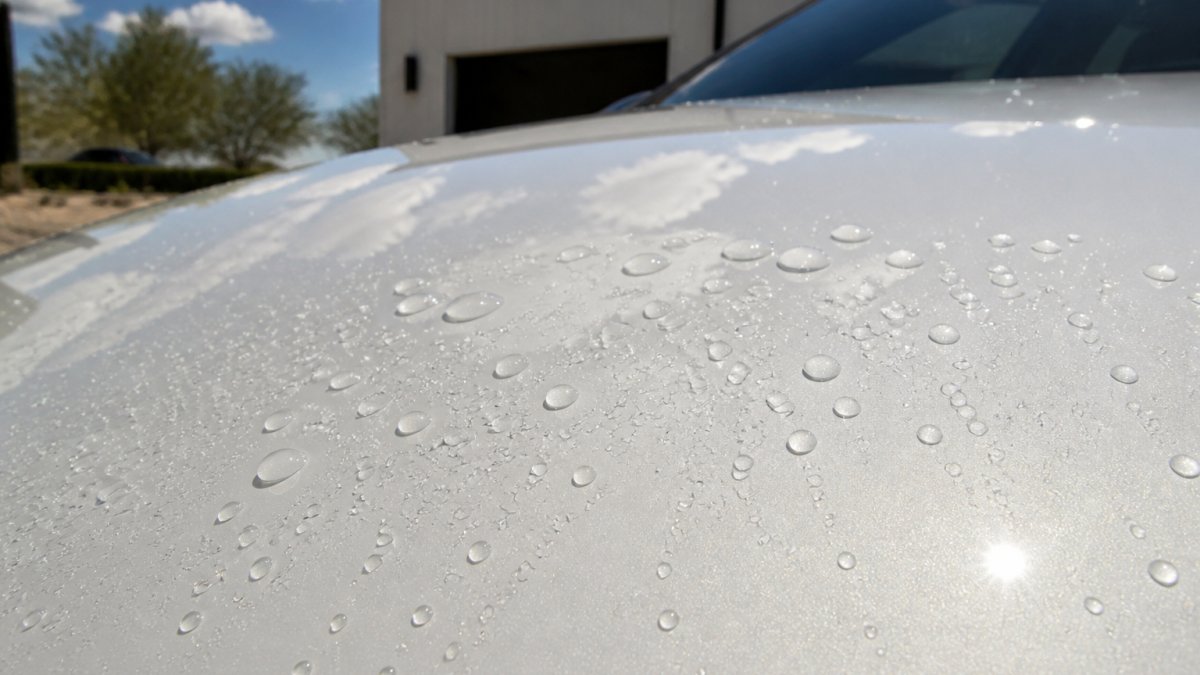
What separates hybrid resin from ceramic is repairability. If your vehicle suffers damage, a rock chip, a scratch, minor paint damage, the coating can be repaired and reapplied even after severe damage. This fundamentally changes the ownership experience.
Guardian Automotive Coatings' technology offers up to 20 times more UV protection than ceramic coatings. In Arizona's intense sun, this difference is material. Your paint retains its color and clarity years longer than it would under ceramic protection.
The application process requires professional expertise. Proper surface preparation, controlled curing environment, and precise application technique are non-negotiable.
For vehicle owners who demand the highest level of protection, who plan to keep their vehicles long-term, or who live in harsh climates, hybrid resin coatings deliver measurable advantages that justify the investment.
Choosing the Right Ceramic Coating Alternative for Your Needs
Most roundups crown a single "best" product. That's rarely useful, because the right alternative depends on your budget, how much effort you'll put in, and what you're actually protecting against. Use this comparison to match the option to your situation.
Compare alternatives on the same criteria
| Option | Typical durability | Upfront cost | Effort | Best against | Main trade-off |
|---|---|---|---|---|---|
| Traditional wax | 1-3 months | Low | Low (DIY) | Gloss, ease of use | Short life; little chemical resistance |
| Hybrid wax | 3-6 months | Low | Low (DIY) | Warm gloss with better durability | Still needs frequent reapplication |
| Spray sealant | 2-4 months | Low | Very low (DIY) | Quick refresh, water beading | Not standalone long-term protection |
| Liquid paint sealant | 6-12 months | Low-moderate | Moderate (DIY) | Flexibility, easy reapplication | Shorter than coatings; limited scratch resistance |
| Ceramic coating | 2-5 years | Moderate-high | High (pro prep) | Hydrophobics, chemical resistance, gloss | Not repairable; degrades with damage |
| Paint protection film | 7-10 years | High | High (pro install) | Rock chips, scratches, impact | Cost; can yellow over time |
| Hybrid resin coating | 5-10 years | Premium | High (pro install) | UV resistance, repairability, gloss | Highest upfront cost |
Match the option to your situation
- High-value vehicle in a harsh climate (intense sun, salt air, heavy highway use): hybrid resin coating or paint protection film. The cost of paint degradation or chip repair outweighs the premium.
- Daily driver with moderate use: ceramic coating or a quality liquid sealant. Good protection and appearance without overspending.
- High-impact exposure (gravel, winter roads, truck traffic): paint protection film on high-impact zones. It absorbs damage a coating can't.
- Appearance-focused enthusiast: hybrid wax or sealant systems. Superior gloss and the freedom to switch products seasonally.
- Budget-conscious owner: spray or liquid sealants and quality wax. Meaningful protection at modest cost, with the option to upgrade later.
Already have a coating? Compatibility and switching
If your vehicle already wears a ceramic coating, you don't have to strip it to use an alternative. Many sealants and spray products can be layered on top as maintenance toppers. If you want to switch entirely, the old coating usually needs to be polished or chemically stripped before a new system is applied. Ask your installer whether a decontamination wash and light polish are required.
Realistic expectations
No alternative delivers the same protection as every other. Waxes and sealants improve gloss and water behavior but offer limited scratch and chemical resistance. Films stop physical damage but don't make paint easier to clean the way a coating does. Hybrid resin coatings aim to combine durability, UV resistance, and repairability, at a premium. Match the protection to the actual threat, and don't assume one product covers every risk.
Frequently Asked Questions
What are the main ceramic coating alternatives available for vehicle protection?
The primary ceramic coating alternatives include paint protection film (PPF), synthetic paint sealants, hybrid resin coatings, and traditional car wax. Paint protection film offers physical barrier protection with self-healing properties. Synthetic sealants provide chemical bonding to the clear coat for hydrophobic protection lasting 12-24 months. Hybrid resin coatings combine advanced polymer chemistry with durability exceeding standard ceramic formulations. Each alternative addresses different protection needs, budgets, and maintenance preferences, making the choice dependent on your vehicle's use and your protection priorities.
Is paint protection film better than ceramic coating for long-term durability?
Paint protection film and ceramic coatings serve different purposes. PPF excels at preventing physical damage, rock chips, scratches, and abrasions, with self-healing capabilities for minor scratches. For comprehensive protection in harsh environments like Arizona's intense UV exposure and desert dust, hybrid resin coatings offer up to 20 times more UV protection than standard ceramic and maintain over 99% integrity after 2,000 hours of UV and moisture exposure, making them a stronger alternative for vehicles exposed to extreme conditions.
How much does professional vehicle paint protection cost compared to DIY options?
Professional paint protection costs vary significantly based on vehicle size, product type, and application complexity. For accurate pricing on professional vehicle paint protection, contact your local installer directly, as costs depend on your specific vehicle, desired coverage area, and chosen protection method. Guardian Automotive Coatings provides custom quotes based on your vehicle's needs.
Can ceramic coating alternatives be removed or reapplied if needed?
Removability varies by product type. Paint protection film can be removed without damaging the clear coat when handled properly. Hybrid resin coatings offer a distinct advantage: they can be repaired and reapplied even after severe damage, allowing you to refresh the protection layer. This reapplicability makes hybrid coatings ideal for collectors and enthusiasts who want to maintain their vehicle's finish throughout ownership.


