Best Paint Protection for Desert Trucks: 2026 Guide
Table of Contents
- Why Desert Trucks Need Specialized Paint Protection
- Paint Protection Film for Trucks: Impact Protection in High-Damage Zones
- Ceramic Coating for Trucks and SUVs: UV and Gloss Protection
- Ceramic Coating vs. Paint Protection Film: Which Wins in the Desert
- Hybrid Resin Coatings: Advanced Protection Beyond Standard Options
- Truck Paint Protection Maintenance: Keeping Your Investment Pristine
- Coverage Options and Total Protection Strategy
- Professional Installation vs. DIY in Hot, Dusty Conditions
- Frequently Asked Questions
Last Updated: October 14, 2026
Why Desert Trucks Need Specialized Paint Protection
Desert environments inflict damage standard coatings cannot withstand: intense UV rays, extreme heat, and abrasive dust, sand, and gravel accelerate paint degradation far beyond what trucks in temperate regions face.
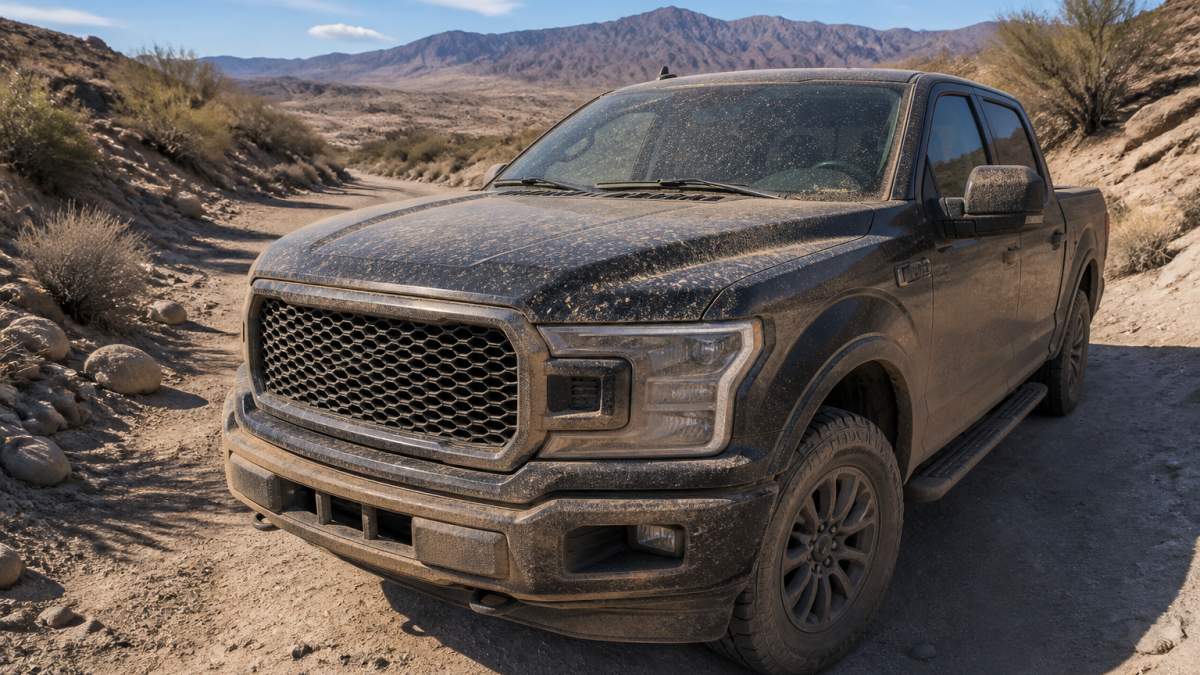
Sand and gravel present constant abrasion hazards: every drive kicks up particles that scratch paint, and dust settles into crevices, trapping moisture and salt residue.
This guide covers the best paint protection for desert trucks.
Paint Protection Film for Trucks: Impact Protection in High-Damage Zones
Paint protection film (PPF) is a transparent, self-healing thermoplastic urethane layer applied over your truck's paint that absorbs impact energy from rocks, gravel, and debris before they reach the clear coat.
Its self-healing property is the strongest advantage: minor scratches and swirl marks disappear when exposed to heat, which matters off-road. PPF also protects against chemical damage from road salt and bird droppings.
Best Coverage Areas for PPF
Strategic PPF placement maximizes protection where damage occurs most: the hood takes the most rock chips and dust abrasion, the front bumper and fenders take direct impact from kicked-up gravel, rocker panels suffer from sand and debris, and door edges benefit from protection against off-road brush.
Full-vehicle PPF protects every painted surface, but many owners choose partial coverage focused on high-impact zones to reduce cost. Highway commuters benefit most from hood and bumper coverage; off-road enthusiasts should extend protection to rocker panels and lower fenders.
PPF Durability Against Desert Conditions
PPF maintains clarity in extreme heat and does not yellow under intense UV the way some coatings do. However, sand and dust embed in the film's surface, creating a dull appearance over time, so regular washing is essential.
PPF requires more frequent maintenance than ceramic coatings because the film attracts dust; washing every two weeks is common.
Ceramic Coating for Trucks and SUVs: UV and Gloss Protection
Ceramic coatings form a hard, glass-like layer over your truck's paint, providing UV protection, enhanced gloss, and easier cleaning via a hydrophobic surface. Unlike PPF, they offer no impact protection: a rock chip still reaches your paint.
Ceramic coatings deliver superior gloss and depth: the mirror-like finish amplifies color vibrancy, while hydrophobic properties reduce water spotting and speed up washing.
How Ceramic Coatings Handle Desert Heat and Sun
Consumer-grade ceramic coatings offer moderate UV protection; professional-grade options last longer, but even premium coatings degrade under extreme desert conditions. Intense UV and temperature cycling cause them to lose hydrophobic properties faster, requiring reapplication every 2-3 years in desert climates versus 3-5 years in moderate environments.
Heat itself does not destroy ceramic coatings, but expansion and contraction of the underlying paint stresses the coating layer, causing micro-cracking that lets UV rays and moisture penetrate beneath it.
Ceramic Coating Limitations in Extreme Environments
Ceramic coatings cannot repair themselves. A scratch or chip is permanent damage that exposes the paint beneath, and the damaged area oxidizes and corrodes faster than surrounding protected paint.
Hydrophobic properties wear away over time in desert conditions, accelerated by UV exposure, heat cycling, and abrasive dust. When hydrophobicity fades, dust and sand stick more readily, requiring more aggressive washing that can scratch the coating further.
Ceramic Coating vs. Paint Protection Film: Which Wins in the Desert
The choice between PPF and ceramic coating depends on your priorities. Both provide value but protect against different threats: PPF excels at preventing impact damage, while ceramic coating delivers superior gloss, easier cleaning, and broader protection against oxidation and UV fading.
For trucks that spend significant time off-road or in high-debris environments, PPF is the superior choice: it prevents the rock chips and scratches ceramic coatings cannot withstand.
Coverage and Impact Resistance Comparison
| Protection Type | Impact Resistance | UV Protection | Gloss Enhancement | Ease of Cleaning | Desert Durability |
|---|---|---|---|---|---|
| Paint Protection Film | Excellent | Good | Minimal | Moderate | Very Good |
| Ceramic Coating | Poor | Good | Excellent | Excellent | Good |
| Hybrid Resin Coating | Excellent | Exceptional | Excellent | Excellent | Excellent |
PPF stops physical damage before it reaches your paint, while ceramic coating cannot prevent impact damage. However, PPF requires more frequent washing in desert environments, since dust and sand embed in the film's surface and create a hazy appearance.
Maintenance and Long-Term Cost Analysis
Initial installation cost varies by coverage area and product quality. PPF costs more upfront but needs minimal maintenance beyond regular washing. Ceramic coating costs less to apply but requires more frequent reapplication in desert climates.
Ceramic coating reapplication in desert conditions happens every 2-3 years, while PPF typically lasts 5-7 years before significant degradation. However, cloudy or damaged PPF requires expensive professional removal and replacement, and true long-term cost includes labor and time without protection during the process.
Hybrid Resin Coatings: Advanced Protection Beyond Standard Options
Hybrid resin coatings represent the advancement beyond traditional ceramic coatings. Guardian Automotive Coatings specializes in this technology, which combines the best properties of PPF and ceramic coatings while eliminating their limitations: impact resistance, exceptional UV protection, superior gloss, and self-healing properties.
These advanced coatings maintain their protective properties far longer in desert conditions. A resin matrix absorbs impact energy while maintaining a hard, glass-like surface.
Superior UV Protection and Durability Testing
Hybrid resin coatings offer up to 20 times more UV protection than ceramic coatings. Independent testing shows they maintain greater than 99% integrity after 2,000 hours of UV and moisture exposure, and exceed 660 pounds per square inch in pull-off tests, demonstrating exceptional adhesion and impact resistance.
The gloss reading on hybrid resin coatings reaches 99.8% independently tested, meaning the finish remains virtually identical to the day of application. The coating does not require reapplication for years.
Repairability and Reapplication Advantages
Unlike standard ceramic coatings, hybrid resin coatings can be repaired and reapplied even after severe damage. If your truck suffers a major impact, the damaged coating can be removed and replaced without affecting the underlying paint.
The ability to reapply the coating is significant for long-term ownership: as your truck ages, you can refresh the coating to restore original gloss and protection without replacing the paint, making hybrid resin coatings ideal for collectors and long-term owners.
Truck Paint Protection Maintenance: Keeping Your Investment Pristine
Proper maintenance extends the life of any paint protection system. The harsh desert environment demands a routine that addresses dust, heat, and UV exposure specifically; neglecting maintenance allows protection to degrade faster.
Desert-Specific Washing and Care Routines
Wash your truck every two weeks in desert conditions to prevent dust and sand accumulation. Use a pH-neutral car wash soap designed for coated surfaces.
Dry your truck immediately after washing with microfiber towels. Air-drying in desert heat creates water spots and mineral deposits that etch into coatings.
Avoid parking under trees or near construction sites where dust and debris accumulate.
When to Reapply or Repair Your Protection System
Monitor your coating's performance regularly. If ceramic coating loses its hydrophobic properties and water no longer beads, reapplication is necessary. If PPF becomes cloudy or yellows, it needs replacement. Hybrid resin coatings maintain their properties far longer, but even these eventually require maintenance.
Inspect high-impact areas monthly. The hood, bumper, and fenders show damage first. Small chips caught early are easier and cheaper to repair than widespread damage.
Coverage Options and Total Protection Strategy
Choosing the right coverage level requires honest assessment of your driving habits and budget. Full-vehicle coverage provides maximum protection but costs significantly more; partial coverage protects the most vulnerable areas while reducing initial expense.
Full-Vehicle vs. Partial Coverage: What Trucks Actually Need
Full-vehicle protection covers every painted surface, including the roof, side panels, rear bumper, and tailgate. For collectors and owners who plan to keep their trucks long-term, full coverage justifies the investment.
Partial coverage focuses on the hood, bumper, fenders, rocker panels, and door edges where damage occurs most frequently.
Off-road drivers should prioritize rocker panel and lower fender coverage; highway commuters benefit most from hood and bumper protection.
High-Impact Zones: Hood, Bumper, Fenders, and Rocker Panels
The hood absorbs more rock chips than any other surface, since gravel and debris kicked up during driving strike it directly.
The front bumper is the second most vulnerable area, catching rocks, insects, and road debris, and it also suffers UV fading because it sits low and catches intense afternoon sun.
Fenders suffer from side-impact debris and dust accumulation.
Professional Installation vs. DIY in Hot, Dusty Conditions
Professional installation delivers superior results compared to DIY, especially in desert conditions.
Professional installers work in controlled environments where temperature, humidity, and dust are managed, with specialized equipment for surface preparation, application, and curing.
Guardian Automotive Coatings handles installation with techniques refined for desert conditions, ensuring your investment delivers maximum protection and appearance.
| Installation Method | Cost | Durability | Appearance | Recommended |
|---|---|---|---|---|
| Professional PPF | Higher | Excellent | Flawless | Yes |
| DIY PPF | Lower | Poor | Variable | No |
| Professional Ceramic | Moderate | Good | Excellent | Yes |
| DIY Ceramic | Lower | Fair | Variable | Conditional |
| Professional Hybrid Resin | Higher | Exceptional | Exceptional | Yes |
Desert truck ownership demands paint protection that matches the severity of your environment. Standard solutions fall short.
Guardian Automotive Coatings' hybrid resin coating technology solves both problems. For truck owners who demand the best paint protection for desert trucks and refuse to compromise on appearance or durability, hybrid resin coating is the superior choice. Get A Quote today to discuss which protection strategy best suits your truck and driving habits.
Frequently Asked Questions
What is the best paint protection for a truck in the desert?
Desert trucks face extreme UV exposure, sand, dust, and gravel damage. Hybrid resin coatings offer the strongest protection, maintaining over 99% integrity after 2,000 hours of UV exposure and providing up to 20 times more UV protection than ceramic coatings. For impact-prone areas, paint protection film adds physical barrier protection. Many truck owners combine both: PPF on the hood, bumper, and fenders, with a ceramic coating or hybrid resin system on remaining surfaces for comprehensive coverage.
Is paint protection film or ceramic coating better for a truck?
Both serve different purposes. Paint protection film excels at preventing rock chips and scratches on high-impact zones like the hood and bumper. Ceramic coatings provide UV protection, water repellency, and easier cleaning across the entire vehicle. In desert conditions, PPF protects against mechanical damage while ceramic coatings or hybrid resin systems protect against UV fading and oxidation. Many truck owners use both together for maximum protection.
How do you protect truck paint from desert sun and dust?
Desert truck paint protection requires a multi-layered approach. Apply paint protection film to high-impact areas (hood, bumper, fenders, rocker panels). Add a ceramic coating or hybrid resin coating to remaining surfaces for UV and chemical resistance. Maintain your truck by washing weekly to remove abrasive dust and sand, use a quality car wash soap designed for coated surfaces. Park in shade when possible and avoid prolonged exposure to intense midday sun.
Does ceramic coating prevent paint fading in the desert?
Standard ceramic coatings provide moderate UV protection but are not designed for extreme desert conditions. They typically fade or lose effectiveness within 2-3 years under intense UV exposure. Hybrid resin coatings offer significantly better protection, maintaining color vibrancy and gloss for much longer. For desert trucks, a hybrid resin coating provides superior fading resistance compared to ceramic coatings alone, with independent testing showing 99.8% gloss retention and resistance to UV degradation.
Can paint protection be repaired if my truck gets damaged?
This depends on your protection system. Paint protection film can be patched or replaced on damaged sections without removing the entire application. Ceramic coatings cannot be spot-repaired and typically require full removal and reapplication if severely damaged. Hybrid resin coatings offer the advantage of being repairable and reapplicable even after severe damage, allowing localized repairs without complete system replacement. This makes hybrid resin coatings ideal for trucks that experience frequent off-road use or exposure to debris.


