5 Steps to Estimate Car Paint Sun Damage Repair Cost
Quick Summary
Car paint sun damage repair cost depends on what the damage is doing to the paint. Light fading may cost $150 to $400 for a one-step polish, while a single panel repaint runs about $500 to $1,500. Full repaints are the most expensive option.
- Polishing can remove oxidation only if the clear coat is still intact.
- Peeling or flaking clear coat cannot be polished away and needs clear-coat repair or repainting.
- Ask every shop for an itemized estimate separating labor, paint, materials and prep.
- Confirm whether blending adjacent panels is included, since it often adds cost.
- Protect the surface after any repair, because polishing removes the top layer and fading returns faster without it.
Table of Contents
- Last Updated: November 24, 2026
- How Much Does Car Paint Sun Damage Repair Cost?
- What Causes Sun Damage to Car Paint
- Step 1: Diagnose Fading, Oxidation or Clear-Coat Failure
- Step 2: Choose a Repair Method by Severity
- Step 3: Price Each Option, From Paint Correction to Repainting
- Step 4: Try a DIY Repair Safely, or Hire a Body Shop
- Booking Your Next Step With Guardian Automotive Coatings
- Frequently Asked Questions
Last Updated: November 24, 2026
Last Updated: November 24, 2026
How Much Does Car Paint Sun Damage Repair Cost?
Car paint sun damage repair costs vary widely depending on the extent of the damage. Sun damage, fading and clear-coat failure each require a different fix, so the cost depends on what the paint is actually doing.
Many owners in Arizona see this damage faster than they expect. The desert sun is intense, and it works on paint every day. Knowing what the damage looks like is the first step to controlling the cost.
- Small spot repairs and paint correction cost less.
- Clear-coat replacement and panel repainting cost more.
- Full repaints are the most expensive option.
Pricing depends on the vehicle, the size of the damaged area, the paint color and the shop's labor rate. Visit the Guardian Automotive Coatings website for current prices or a quote.
What Causes Sun Damage to Car Paint
Ultraviolet (UV) light breaks down the top layers of car paint over time. The clear coat takes most of the hit because it sits on the surface. Once the clear coat weakens, the color underneath starts to look dull and faded.
Heat makes the problem worse. Hot panels expand and contract with each temperature swing, which can stress the finish. Dust and grit acting like fine sandpaper speed up the wear.
Common causes include:
- Long daily exposure to direct sunlight
- High desert heat and temperature swings
- Dust, road grime and blowing sand
- Years of parking outdoors without cover
- Harsh cleaners or automatic car washes with rough brushes
A common mistake is ignoring early fading. Once the clear coat fails, the damage usually spreads, and the repair gets more expensive.
Step 1: Diagnose Fading, Oxidation or Clear-Coat Failure
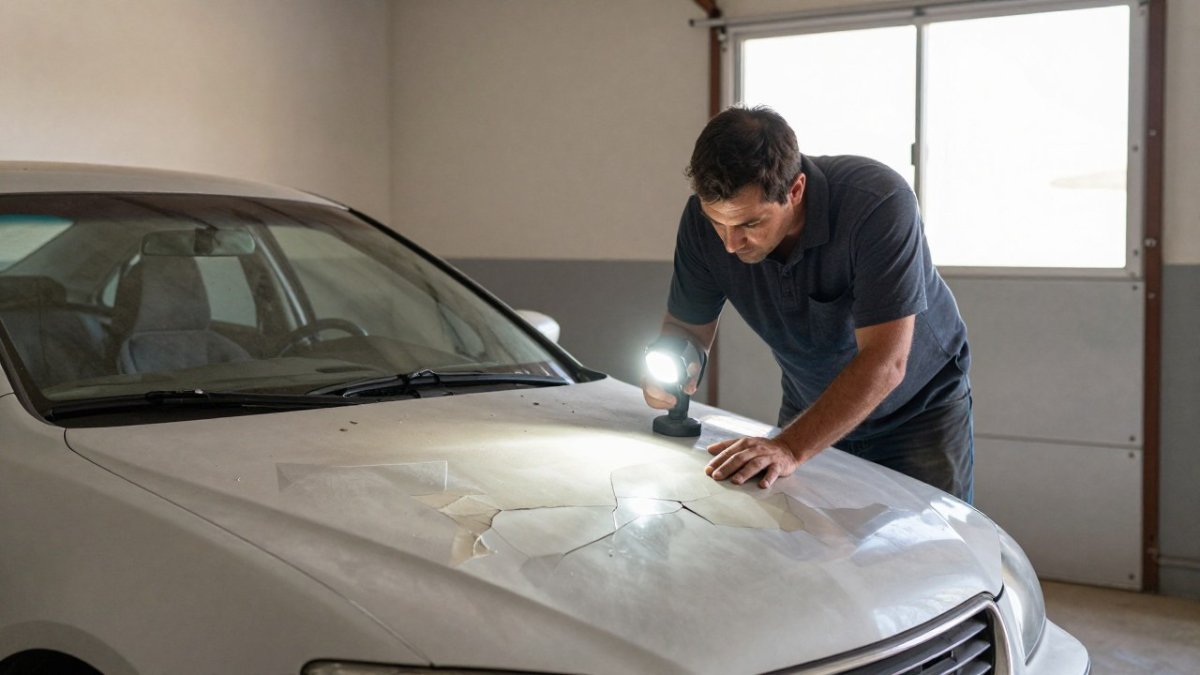
Start by looking at the panel closely in shade and in direct light. For a full checklist on inspecting car paint condition before any coating, work through each check before deciding on a repair. Fading looks like a flat, chalky color. Oxidation looks like a hazy, powdery film. Clear-coat failure looks like peeling, cracking or flaking.
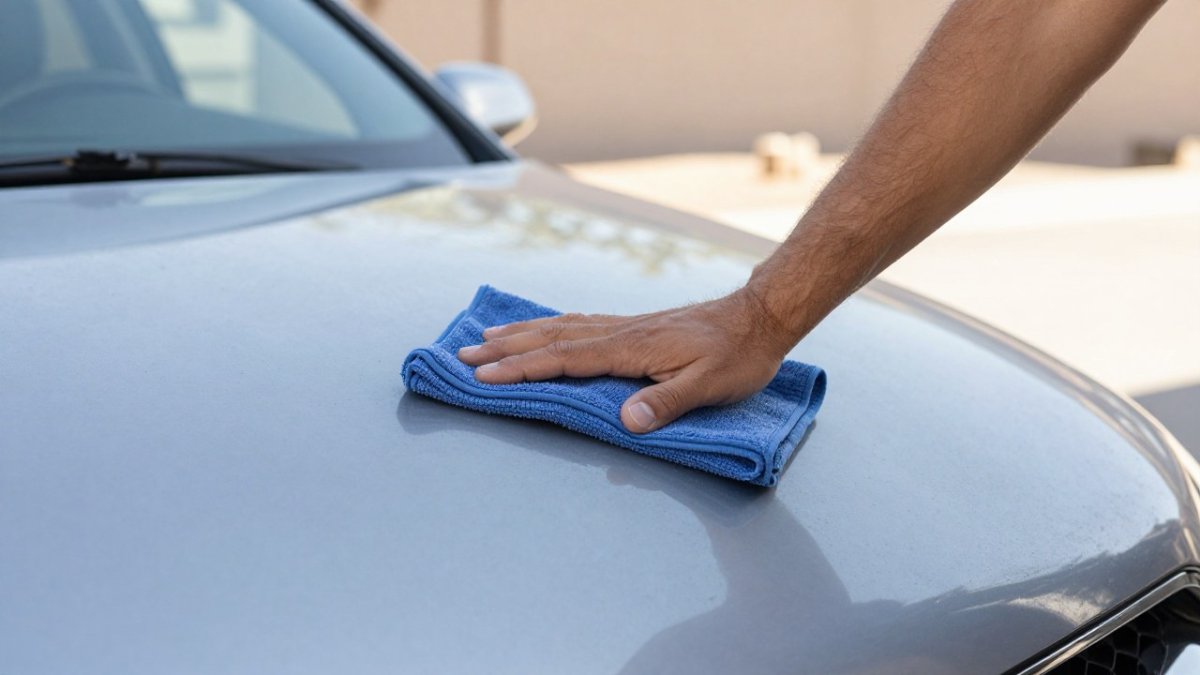
Run your hand gently across the paint. If the surface feels rough or chalky on a clean panel, the clear coat is breaking down. Try a test spot on a hidden area, such as the lower door edge.
Oxidation versus peeling clear coat
Oxidation can usually be polished out if the clear coat is still intact. Peeling clear coat cannot be polished away, because the top layer is already gone. Polishing a failed clear coat only spreads the damage and wastes money.
If you see lifting edges or flakes, the clear coat has failed. That damage calls for clear-coat repair or panel repainting.
Check your options by reviewing the Consumer guidance on vehicle paint care from the Federal Trade Commission for tips on verifying repair quotes before you agree to work.
Step 2: Choose a Repair Method by Severity
Match the repair to the damage level. Mild fading often responds to polishing. Moderate oxidation may need compounding. Failed clear coat usually calls for sanding, a new clear coat or a panel repaint.
| Damage Level | Typical Method | Best For |
|---|---|---|
| Light fading | Polishing | Dull but intact paint |
| Moderate oxidation | Compounding and polishing | Chalky, hazy surfaces |
| Failed clear coat | Sanding and clear-coat repair | Peeling or flaking |
| Severe damage | Panel repaint | Large or multiple failed areas |
Guardian Automotive Coatings can help you assess which approach fits your vehicle. For broader protection options, see the [page:1] guide on repairing damaged paint coatings.
Keep in mind that a repair lasts longer when the surface is protected afterward.
Step 3: Price Each Option, From Paint Correction to Repainting
Pricing varies by vehicle and by shop, but the biggest mistake owners make is comparing a single bottom-line number from two quotes. Ask every shop for an itemized estimate broken into labor, paint and materials, and prep, so you can see what is actually driving the price. Below are typical ranges most shops in the United States quote for each repair tier; treat them as planning figures, not quotes, because a pickup truck with three damaged panels and a pearl-white finish will land at the top of every range.
| Repair Method | Typical Price Range (USD) | What You Are Paying For |
|---|---|---|
| One-step polish or paint correction | $150-$400 | Machine polishing of one to two panels, no coating |
| Multi-step compound and polish | $300-$800 | Heavier oxidation removal, more labor hours |
| Spot repair with clear coat | $400-$1,000 | Sanding, color-matched base coat, clear coat on a small area |
| Single panel repaint | $500-$1,500 | Full panel prep, base coat, clear coat, blending into adjacent panels |
| Two- to three-panel repaint | $1,200-$3,000 | More prep, more paint, more blending labor |
| Full-vehicle repaint (same color) | $3,000-$7,500 | Full sand, mask, seal, base and clear over the whole body |
| Full-vehicle repaint (color change) | $5,000-$12,000+ | Door jambs, under hood, trim removal, full disassembly |
What actually drives the number:
- Labor hours. Prep and sanding usually account for the largest share of a body-shop invoice. A panel with failed clear coat takes far more sanding than a panel that only needs polishing.
- Paint and materials. Primer, base coat, clear coat and reducer are billed separately at most shops. Tri-coat and pearl colors cost more because they require an extra mid-coat and more careful matching.
- Color matching and blending. Shops typically blend into the adjacent panel so the repair does not show a hard edge. That means you pay to refinish part of a panel that was not damaged.
- Panel count and access. A hood or roof is easier to work on than a door with trim, handles and glass that must be removed and reinstalled.
- Shop labor rate. Body-shop labor rates vary widely by region and by shop type; a dealership collision center usually charges more per hour than an independent paint shop.
- Prep condition. Rust, dents or previous poor repairs add bodywork hours before any paint is sprayed.
How to read an itemized estimate:
- Confirm the labor hours and the hourly rate are listed separately.
- Confirm paint and materials are a line item, not folded into labor.
- Confirm whether blending adjacent panels is included or billed extra.
- Confirm what warranty covers the paint and for how long.
- Confirm whether the shop will do a written pre-repair inspection so you both agree on the starting condition.
A quote that is $400 cheaper but excludes blending, materials or warranty is usually not cheaper once the work is done. Compare the line items, not the total.
Visit the Guardian Automotive Coatings website for current prices or a quote tailored to your vehicle. To see how to get a professional hybrid coating quote, step by step, follow the booking path below.
Typical price range for each sun damage car paint repair method (USD)
Step 4: Try a DIY Repair Safely, or Hire a Body Shop
Light polishing is a reasonable DIY task for most owners, and doing it correctly saves real money. Heavier work, sanding, clear-coat application and panel repainting, is where DIY goes wrong, because those steps need controlled prep, the right materials and proper curing conditions. A mistake can turn a small problem into a large one.
A realistic DIY polishing process:
- Wash and dry the panel, then clay it to remove bonded grit. Polishing over grit grinds it into the clear coat.
- Work in shade on a cool panel. Direct sun softens the clear coat and makes polish dry too fast.
- Tape off trim, badges and panel gaps so polish does not stain plastic or rubber.
- Use a dual-action polisher with a soft foam pad and a fine polish. Keep the pad moving and let the machine do the work.
- Test a small area first, wipe off the residue and check the result in direct light before continuing.
- Apply a protective layer, sealant, wax or a coating, after polishing, because polishing removes the sacrificial top layer.
Tools and materials for a safe DIY polish: dual-action polisher, two or three foam pads, fine polish, microfiber towels, painter's tape, clay bar and lubricant, and a protectant. A rotary polisher is not a beginner tool; it generates heat fast and burns through thin clear coat.
Watch out: Stop immediately if the pad starts to grab, if the paint looks glossy in one spot but dull around it, or if you see a lighter ring appear. Those are signs you are thinning the clear coat, and continuing will burn through it.
When to stop and call a shop:
- The surface feels rough or chalky even after polishing.
- You see lifting edges, cracks or flakes.
- The color looks different under the polish than around it.
- The damage covers more than one panel.
How long each repair actually lasts:
| Method | Typical Durability | Main Limitation |
|---|---|---|
| DIY polish | 3-12 months before fading returns | Removes a thin layer each time; not repeatable indefinitely |
| Professional paint correction | 1-2 years with protection | Cannot restore failed clear coat |
| Spot repair with clear coat | 3-5 years | Blending edge can show over time |
| Panel repaint | 5-10 years with care | Quality depends heavily on prep and paint system |
| Full repaint | 8-15 years with care | Highest cost; value depends on vehicle |
Durability depends on sun exposure, washing habits and whether a protective layer is maintained. A repair without protection will fade faster than the same repair with a coating or sealant reapplied on schedule.
Before you choose a shop, ask:
- Is the quote itemized by labor and materials?
- Does the shop explain which method it will use and why?
- What warranty covers the work, and for how long?
- Will the shop show you the failed area before and after prep?
Weigh repair and protection costs together, because the cheapest repair that is not protected will cost more over time.
Booking Your Next Step With Guardian Automotive Coatings
Sun damage gets more expensive the longer it goes unaddressed. Guardian Automotive Coatings offers Hybrid Resin Coating services that deliver long-term protection against Arizona's harsh sun, and its coatings can be repaired and reapplied even after severe damage. Visit the Guardian Automotive Coatings website to request a quote.
Frequently Asked Questions
How much does it cost to fix sun damage on car paint?
Costs depend on how far the damage has progressed and how many panels are affected. Light fading may be addressed with paint correction, which is usually the least expensive option. Clear-coat failure or peeling typically requires sanding and clear-coat repair or panel repainting, which costs more because of labor and materials. Get itemized quotes that list each panel and method, and compare them against your diagnosis. Visit the Guardian Automotive Coatings website for current prices or a quote for your vehicle.
Can sun-damaged car paint be restored?
Often, yes, but the result depends on the damage. Oxidation and mild fading can usually be improved with polishing and compounding because the clear coat is still intact. Once the clear coat has peeled or failed, polishing cannot bring it back, and the affected panels generally need sanding, clear-coat repair or repainting. A diagnosis before repair helps you avoid paying for a method that cannot fix the problem.
How can you repair sun-damaged car paint at home?
For light oxidation, start by washing and decontaminating the surface, then use a dual-action polisher or hand polish with a fine cutting compound and finish with a protective wax or sealant. Work in shade on a cool panel and test a small area first. Do not attempt DIY repair on peeling clear coat or deep failure, because sanding through the clear coat or base coat can make a repair more expensive. A sun damage car paint repair kit can help with minor haze but will not reverse clear-coat failure.
Is it worth fixing sun damage on a car?
It depends on the vehicle's value, how visible the damage is and whether the damage is spreading. Fixing minor oxidation is usually worthwhile because it improves appearance and can support resale value. Severe clear-coat failure will keep spreading if left alone, and it becomes harder and more costly to repair. Compare the repair cost with the expected change in value, and ask your insurer whether the damage is covered, since insurance rarely pays for gradual sun exposure.


