Ceramic Coating Arizona Heat Durability: A 2026 Guide
Table of Contents
- How Arizona Heat Affects Vehicle Paint and Ceramic Coatings
- Understanding Ceramic Coating Heat and Temperature Resistance
- UV Exposure and Paint Fading: What Happens Beneath the Surface
- Ceramic Coating Application Temperature: Getting It Right in Hot Weather
- Ceramic Coating Lifespan in Hot Climates: Real-World Durability
- Ceramic Coating vs. Wax for Sun Protection: Which Lasts Longer
- Ceramic Coating Maintenance in Desert Conditions: Protecting Your Investment
- Why Standard Ceramic Coatings Fail in Extreme Heat and What Works Better
- Frequently Asked Questions
Last Updated: October 16, 2026
How Arizona Heat Affects Vehicle Paint and Ceramic Coatings
Arizona's intense sun is hostile to automotive paint. Temperatures regularly exceed 110°F, and asphalt can reach 180°F or higher, accelerating paint degradation through mechanisms standard protection cannot withstand.
UV radiation penetrates clear coat layers and breaks down the resin binders holding paint together. Constant thermal cycling, heating by day, cooling at night, makes paint expand and contract, creating micro-fractures.
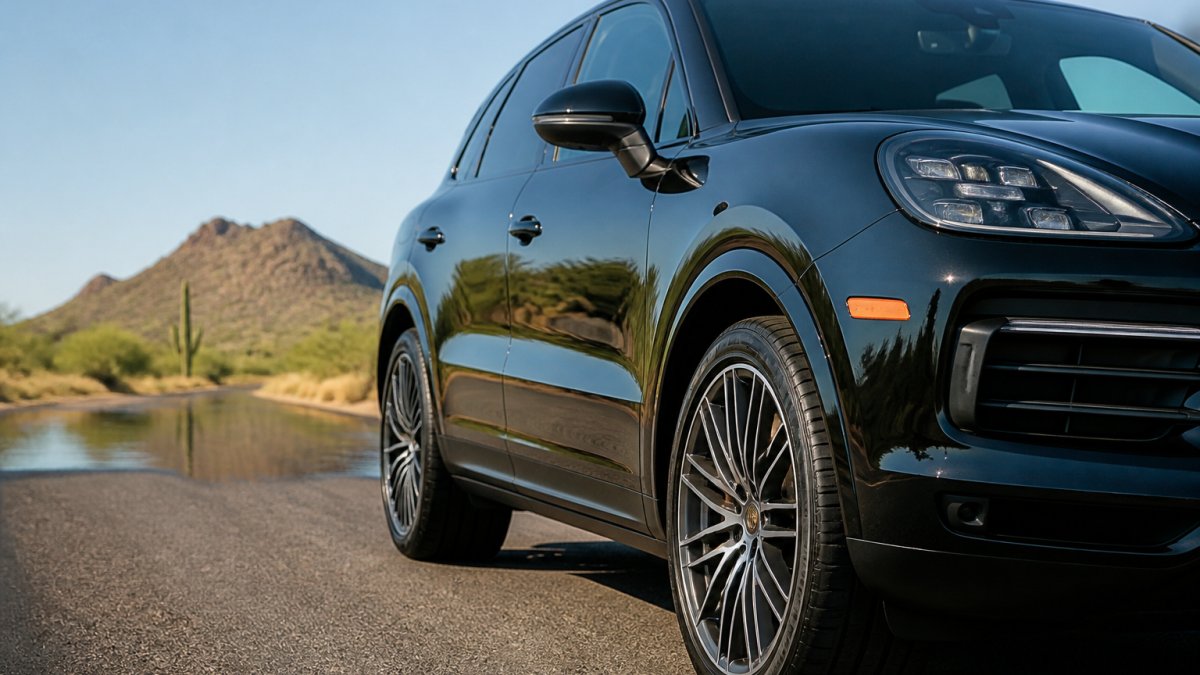
Standard ceramic coatings were engineered for moderate climates. They offer some UV protection and water beading but degrade under prolonged extreme heat and UV exposure.
This is where ceramic coating Arizona heat durability becomes critical. Not all coatings are created equal.
Understanding Ceramic Coating Heat and Temperature Resistance
Ceramic coatings form a chemical bond with paint through hydrolysis, hardening into a glassy layer atop the clear coat that theoretically blocks UV, water, and contaminants.
The problem emerges under sustained high temperatures. Most ceramic products are rated for heat resistance up to 200°F to 250°F, but Arizona paint surface temperatures regularly exceed that threshold. Black or dark vehicles absorb more heat, pushing temperatures even higher.
When a ceramic coating reaches its thermal limit, several things happen:
- The resin matrix begins to soften and lose rigidity
- The chemical bond between the coating and clear coat weakens
- Hydrophobic properties diminish as the coating surface becomes less stable
- Micro-cracks develop in the coating layer
- Water and contaminants find pathways underneath the failing coating
Standard ceramic coatings also face a durability paradox in Arizona: the same UV radiation that breaks down unprotected paint degrades the coating itself. Over time it becomes thinner, more porous, and less effective at repelling water and preventing oxidation.
The ceramic coating Arizona heat durability issue isn't theoretical.
That's why advanced coatings like Guardian's Hybrid Resin Coating perform differently. Engineered specifically for extreme heat, they maintain structural integrity well above 250°F, keep the coating-to-paint bond stable through repeated thermal cycling, and resist UV degradation far better than standard ceramic products.
UV Exposure and Paint Fading: What Happens Beneath the Surface
Ultraviolet radiation is the primary driver of paint fading and oxidation. UV light penetrates the clear coat and breaks down chemical bonds in paint pigments and binders, continuously in Arizona, where UV index values regularly reach 10 or higher.
Paint fading occurs in stages. First the clear coat loses gloss as UV breaks down the resin matrix, and color turns dull and chalky. Then UV reaches the base layer and degrades pigments: vibrant red becomes washed-out pink, deep blues turn pale.
Ceramic coatings offer some UV protection via a barrier layer, but it degrades.
The distinction between ceramic coating Arizona heat durability and actual UV protection matters: a coating that resists heat damage may still let UV radiation penetrate and degrade paint. True protection requires both thermal stability and UV absorption or reflection.
Guardian's Hybrid Resin Coating provides up to 20 times more UV protection than standard ceramic coatings, absorbing and reflecting far more harmful UV before it reaches your paint.
Ceramic Coating Application Temperature: Getting It Right in Hot Weather
Applying ceramic coating in Arizona heat requires precision and timing. Most coatings need ambient temperatures between 60°F and 85°F with humidity below 60%, conditions Arizona summers violate.
If you attempt to apply ceramic coating during the day when temperatures exceed 90°F, several problems emerge:
- The coating cures too quickly, creating an uneven, streaky finish
- Air bubbles get trapped in the coating layer, weakening adhesion
- The coating surface hardens before it can bond properly with the clear coat
- Dust and sand particles settle into the wet coating before it sets
- The final gloss and clarity suffer significantly
Professional Arizona installers typically schedule applications for early morning, late evening, or cooler months so the coating cures slowly and bonds properly.
Paint preparation is equally critical. The vehicle must be thoroughly decontaminated of dust, road grime, and mineral deposits, contamination trapped under a coating becomes permanent and degrades the finish. In Arizona's dusty environment, that means multiple clay bar treatments and careful pH-neutral washing.
Surface preparation also involves paint correction if needed: swirl marks, light scratches, and oxidation must be addressed first, because a ceramic coating magnifies imperfections rather than hiding them.
Guardian's application process includes extended curing in controlled conditions for maximum adhesion and thermal stability. That attention to detail is why Guardian's Hybrid Resin Coating maintains over 99% integrity after 2,000 hours of UV and moisture exposure.
Ceramic Coating Lifespan in Hot Climates: Real-World Durability
Marketing claims about ceramic coating lifespan often don't match real-world Arizona results. A coating advertised as "10 years of protection" might last two to three years before losing effectiveness.
The discrepancy comes from testing conditions: most coatings are tested in labs or moderate climates, while Arizona's extreme heat, intense UV, dust, hard water, and thermal cycling are far more aggressive than standard protocols.
Real-world durability in Arizona depends on several factors:
- Coating formulation and material science (not all ceramics are equal)
- Vehicle color (darker colors absorb more heat and degrade coatings faster)
- Parking conditions (covered parking extends coating life significantly)
- Maintenance routine (regular washing and pH-neutral care preserves coating integrity)
- Initial application quality (proper curing and adhesion determine longevity)
A standard ceramic coating typically lasts 18 to 36 months in Arizona if properly maintained, and some premium products reach four to five years, but most owners see noticeable degradation, reduced beading, increased etching, and fading gloss within two years.
Guardian's Hybrid Resin Coating delivers fundamentally different durability.
Durability also depends on reapplication capability. Some coatings bond so permanently that repair or refresh requires stripping the entire coating; Guardian's technology allows repairs and reapplications even after severe damage, so your vehicle retains protection indefinitely.
Ceramic Coating vs. Wax for Sun Protection: Which Lasts Longer
The choice between ceramic coating and wax comes down to durability, protection level, and maintenance commitment.
Wax provides basic UV and water protection, creating a hydrophobic surface that eases washing and beads decently for a few months. But it degrades quickly in Arizona heat, most wax lasts 4 to 8 weeks, requiring reapplication every month or two.
Wax also offers minimal thermal protection, no barrier against the surface temperature extremes that degrade Arizona paint. It simply sits atop the clear coat and wears away through sun, washing, and contamination.
Ceramic coatings create a more durable bond with the paint surface, lasting months longer than wax with better UV protection, but standard ceramics still degrade faster in Arizona than in moderate climates.
The durability comparison is clear:
| Protection Type | Lifespan in Arizona | UV Protection | Heat Resistance | Maintenance |
|---|---|---|---|---|
| Wax | 4-8 weeks | Minimal | Poor | Monthly reapplication |
| Standard Ceramic | 18-36 months | Moderate | Moderate | Quarterly washing |
| Hybrid Resin Coating | 5+ years | Superior | Excellent | Regular maintenance |
Wax is budget-friendly but needs constant reapplication; ceramic coating protects better but still degrades in Arizona heat. Guardian's Hybrid Resin Coating provides the longest-lasting protection with thermal and UV resistance engineered for extreme heat.
Ceramic Coating Maintenance in Desert Conditions: Protecting Your Investment
Proper maintenance significantly extends ceramic coating lifespan in Arizona's harsh environment.
The foundation is regular washing with pH-neutral shampoo. Arizona's hard water contains minerals that etch and spot coatings, and tap water left to dry leaves permanent deposits, distilled or deionized water is ideal for the final rinse.
Wash more often during dusty seasons: Arizona dust contains fine particles that settle on the coating and scratch during washing. Pre-rinse thoroughly with a hose before using a wash mitt to remove loose dust and reduce scratching.
Microfiber towels are essential for drying, cotton and chamois leave lint and cause micro-scratches, while quality microfiber absorbs water efficiently and leaves no residue.
Additional maintenance steps for Arizona conditions:
- Inspect the coating monthly for water beading and gloss retention
- Address bird droppings and tree sap immediately (these etch through coatings quickly)
- Use ceramic coating-safe wheel cleaner to prevent brake dust from etching the coating
- Avoid automatic car washes with brushes (they scratch ceramic coatings)
- Park in shade when possible to reduce thermal stress on the coating
- Consider a protective cover for extended outdoor parking
Many Arizona owners benefit from professional ceramic coating maintenance: quarterly washes with specialized pH-neutral products and protective sprays keep the coating optimal, extending lifespan and maintaining the mirror-like finish.
Regular inspection confirms the coating is performing; if beading diminishes or gloss fades, professional evaluation determines whether maintenance or reapplication is needed.
Why Standard Ceramic Coatings Fail in Extreme Heat and What Works Better
Standard ceramic coatings fail in Arizona for predictable material-science and thermal-physics reasons.
Most ceramic coatings use silicon dioxide (SiO2) as the primary protective component.
Arizona's heat creates another failure mechanism: thermal cycling stress. Paint expands when heated and contracts when cooled, throughout the day and across seasons.
Standard ceramic coatings also suffer UV degradation of the coating itself: the resin binders holding ceramic particles together break down under intense UV, so over time the coating thins, gloss fades, and hydrophobic properties diminish.
Owners often discover these failures only after the fact: by the time water stops beading or etching appears, the coating bond is already compromised, and repair is difficult or impossible.
Advanced formulations address these limitations through superior material science.
Its advanced UV protection means less resin-matrix degradation over time: testing shows Guardian's coating maintains over 99% integrity after 2,000 hours of UV and moisture exposure, far exceeding standard ceramic performance in Arizona conditions.
Guardian's coating also exceeds 660 pounds per square inch in pull-off tests, demonstrating exceptional adhesion.
Protecting your vehicle's paint in Arizona requires more than a standard ceramic coating. The extreme heat, intense UV radiation, and harsh environmental conditions demand a coating engineered for these specific challenges. Guardian Automotive Coatings provides Hybrid Resin Coating technology that maintains over 99% integrity after 2,000 hours of UV and moisture exposure and delivers up to 20 times more UV protection than conventional ceramic coatings. With the ability to be repaired and reapplied even after severe damage, Guardian's solution ensures your vehicle retains its mirror-like finish and paint vibrancy for years. Get A Quote and discover how advanced coating technology protects your investment against Arizona's harshest conditions.
Frequently Asked Questions
Can ceramic coating withstand high heat in Arizona?
Standard ceramic coatings can resist moderate heat, but extreme temperatures in Arizona create challenges. Most ceramic coatings begin to degrade when surface temperatures exceed their rated threshold. Hybrid resin coatings, however, are engineered to maintain structural integrity even when vehicle surfaces reach 160°F or higher. The key difference is the chemical bond strength and thermal cycling resistance, how well the coating expands and contracts with temperature fluctuations without losing adhesion or developing micro-fractures.
How long does ceramic coating last in hot, dusty desert conditions?
Ceramic coating lifespan in hot climates depends heavily on environmental exposure and maintenance. In Arizona's extreme conditions, standard ceramic coatings typically last 2-3 years before showing visible degradation, while advanced formulations can maintain integrity for 5-7 years or longer. UV exposure accelerates oxidation of the coating's surface, and dust, sand, and hard-water minerals compound the damage. Regular maintenance, including pH-neutral washing and decontamination, extends lifespan significantly. Professional-grade coatings that exceed 99% integrity after 2,000 hours of UV and moisture exposure offer substantially longer protection.
Is it safe to apply ceramic coating in hot weather?
Ceramic coating application temperature is critical to curing success. Most ceramic coatings require surface temperatures between 60°F and 85°F for proper chemical bonding. Applying in temperatures above 90°F risks incomplete curing, poor adhesion, and premature failure. In Arizona's heat, the best approach is early-morning application or shaded environments. Allow adequate curing time, typically 24-48 hours in cool conditions, potentially longer in heat. Some advanced hybrid resin formulations are engineered for hot-weather application with specialized curing protocols that account for thermal cycling.
Should I use ceramic coating or wax for sun protection in Arizona?
Ceramic coating vs. wax for sun protection reveals a significant durability gap. Wax provides 2-4 months of protection before washing away, while ceramic coatings bond chemically to clear coat and last years. Ceramic coatings offer superior UV resistance, water beading, and chemical resistance. However, standard ceramic coatings in extreme heat environments may not deliver advertised longevity. Hybrid resin coatings bridge this gap, they provide 20 times more UV protection than standard ceramic coatings, maintain gloss readings of 99.8%, and resist thermal cycling that causes standard coatings to fail. For Arizona conditions, ceramic coating durability far exceeds wax, but coating quality matters enormously.


