Does Ceramic Coating Prevent Paint Fading? A Complete Guide
Table of Contents
- How Ceramic Coating Protects Against UV Exposure and Paint Fading
- Ceramic Coating UV Protection: What the Science Shows
- Understanding Paint Oxidation, Fading, and Clear Coat Degradation
- How to Prevent Car Paint from Fading: Application and Maintenance
- Does Ceramic Coating Restore Faded Paint? Realistic Expectations
- Ceramic Coating Durability: Lifespan, Maintenance, and Performance
- Ceramic Coating vs. Alternative Protection Methods
- Conclusion
- Frequently Asked Questions
Last Updated: October 6, 2026
How Ceramic Coating Protects Against UV Exposure and Paint Fading
Does ceramic coating prevent paint fading? Yes, with caveats. Ceramic coatings create a physical barrier between your paint and UV rays, but protection varies with coating type, application quality, and maintenance.
UV rays break down the clear coat, causing color fade and gloss loss. A ceramic coating sits on top and absorbs much of that UV energy before it reaches the paint beneath.
The key difference from other methods is durability: wax lasts weeks to months, while ceramic coatings last 2-5 years or longer, a real difference for Arizona owners facing intense sun.
Ceramic Coating UV Protection: What the Science Shows
Ceramic coatings use a silica-based (SiO2) or siloxane resin matrix. When cured, that largely inorganic film bonds semi-permanently to the clear coat, resisting the UV-driven breakdown that degrades organic waxes and clear coat resins through UV absorption, surface reflection, and a physical barrier against oxygen and contaminants.
What the science does and does not support:
- What is well established: A properly cured ceramic film reduces the rate at which UV and oxygen attack the clear coat. Independent lab testing measures UV transmittance, gloss retention, and adhesion after accelerated weathering.
- What is often overstated: No consumer ceramic coating blocks 100% of UV. Most films transmit some UVA and UVB. Protection is a reduction, not a wall. Marketing language like "UV-proof" or "permanent UV block" is not supported by independent testing.
- What is genuinely uncertain: Fading prevention over 5-10 years depends on film thickness, substrate condition, climate, and maintenance. Brands claiming a fixed UV multiplier should provide third-party test data.
Film thickness matters more than most buyers realize. A coating at 1-2 microns behaves differently from one at 3-5 microns; thicker films provide more UV absorption capacity and sacrificial material as the coating wears.
ASTM weathering and UV exposure test standards
A realistic way to read coating claims:
- Look for third-party test data, not manufacturer numbers. Accelerated weathering tests (ASTM or SAE) and pull-off adhesion tests are the most useful data points.
- Treat "UV protection" as a relative ranking, not an absolute guarantee. A high-quality coating slows fading; it does not stop it forever.
- The clear coat underneath still ages. A coating slows the process but does not reset the clock.
For a vehicle parked outdoors in a high-UV climate, a quality ceramic coating is one of the better tools for slowing UV-related fading, but it works best as part of a system: clean paint, corrected defects, even application, and consistent washing.
Understanding Paint Oxidation, Fading, and Clear Coat Degradation
Paint fading happens through two main mechanisms: UV exposure and oxidation.
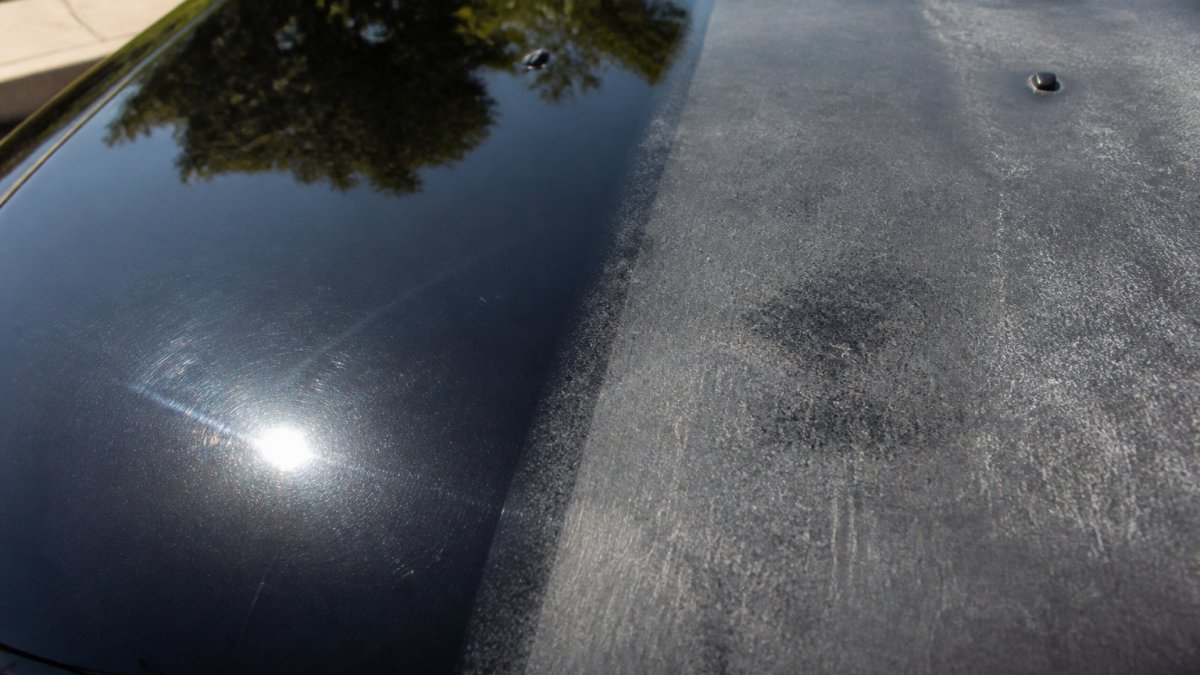
UV exposure directly breaks down the chemical bonds in your clear coat and paint, faster in intense climates like Arizona.
Oxidation is paint reacting with oxygen, creating a dull, chalky layer. UV accelerates it, which is why faded cars look both dull and discolored.
Your clear coat is the first line of defense, a transparent layer over the colored base coat. Once UV degrades it, the base coat fades quickly.
Older paint is more vulnerable: the clear coat is thinner and the structure compromised.
How to Prevent Car Paint from Fading: Application and Maintenance
Preventing paint fading starts before you apply any coating. Proper surface preparation determines whether ceramic coating protects your paint effectively.
Step 2: Surface Cleaning Wash thoroughly to remove all contaminants. Ceramic coating bonds to clean paint; dirt, wax, or residue prevents proper adhesion.
Step 3: Professional Application This is where most DIY attempts fall short. Uneven application leaves gaps where UV rays still reach your clear coat.
Step 4: Curing Time Ceramic coating needs time to cure.
Maintenance After Application
Ceramic coating isn't maintenance-free. Regular washing keeps it effective.
- Wash your vehicle every 2 weeks in normal conditions
- Use pH-neutral car wash soap, not dish soap
- Avoid automatic car washes with harsh brushes
- Dry with microfiber towels to prevent water spots
- Consider ceramic coating toppers annually to refresh protection
Maintenance washing prevents contamination buildup.
Does Ceramic Coating Restore Faded Paint? Realistic Expectations
Here's where many owners get disappointed: ceramic coating does not restore faded paint. It prevents future fading but cannot reverse existing damage.
If your paint is already faded, oxidized, or discolored, you have two options:
Option 1: Paint Correction First Professional detailers can polish faded paint to restore some vibrancy, removing the oxidized layer and revealing fresher paint beneath. After correction, ceramic coating protects against future fading. Best for mild to moderate fading.
Option 2: Paint Refinishing For severely faded paint, the only real solution is repainting. No coating can restore paint damaged to the base coat level. Protective coating can be applied to new paint, keeping it vibrant for years.
The key insight: ceramic coating is preventative, most valuable on new or recently corrected paint. Wait until paint is severely faded and coating alone won't solve the problem, which is why many luxury vehicle owners apply it immediately after purchase.
Ceramic Coating Durability: Lifespan, Maintenance, and Performance
Ceramic coating durability depends on the product and how well you maintain it. Professional-grade coatings outlast consumer versions by a significant margin.
Standard ceramic coatings typically last 2-5 years with consistent UV protection.
Our hybrid resin technology maintains greater than 99% integrity after 2,000 hours of combined UV and moisture exposure.
| Protection Method | Typical Lifespan | UV Protection Level | Maintenance |
|---|---|---|---|
| Wax | 2-3 months | Basic | Frequent reapplication |
| Sealant | 6-12 months | Moderate | Regular washing |
| Standard Ceramic | 2-5 years | Strong | Quarterly maintenance |
| Hybrid Resin Coating | 5+ years | Superior | Annual refresh |
Durability also depends on exposure. A garaged car gets more life from ceramic coating than one parked outside daily; Arizona's intense sun degrades outdoor vehicles faster.
Performance testing matters. Look for coatings independently tested for durability.
Ceramic Coating vs. Alternative Protection Methods
Most articles compare ceramic coating to wax, sealant, and paint protection film (PPF) as if one option wins.
What each option actually does
- Wax: Carnauba or synthetic waxes sit on top of the clear coat for short-term UV and water protection, lasting weeks to a few months. They do little for rock chips or scratches, reasonable for a garage-kept weekend car.
- Paint sealant: Polymer sealants last 6-12 months with moderate UV and contaminant resistance. Easier to apply than ceramic coatings and more forgiving of imperfect paint, but they still don't stop chips or scratches.
- Ceramic coating: A cured silica-based film that bonds to the clear coat, providing the strongest UV and chemical resistance of the three liquid options and lasting years with proper care. It does not prevent rock chips, deep scratches, or impact damage, and does not restore faded paint.
- Paint protection film (PPF): A thick, clear urethane film that absorbs impact from rocks, road debris, and light scratches; many quality PPF products also include UV inhibitors. PPF is best for chip and scratch protection; ceramic coating is best for UV, chemical, and gloss protection. Many owners combine them, PPF on high-impact panels (hood, bumper, mirrors, rocker panels) and ceramic coating over the rest.
- Covered parking or a garage: The single most effective fading prevention method. A vehicle stored indoors sees essentially no UV exposure, and no coating can match that. Covered parking plus a coating is the strongest combination.
A practical decision guide
- Where is the vehicle parked most of the day? Garage or covered → wax or sealant may be enough. Open lot or street → ceramic coating is worth the cost. Year-round direct sun → coating plus covered parking when possible.
- How many miles per year, and on what roads? Highway commuting behind trucks → PPF on the front end matters more than coating. Low-mileage, garaged → wax or sealant is often sufficient.
- What is the paint's current condition? New or recently corrected → coating locks in the best result. Faded or oxidized → paint correction first, then coating. Severely failed clear coat → repaint before any coating.
- What is the maintenance reality? Hand-washing every two weeks → coating performs near its rated lifespan. Automatic brush washes → coating degrades faster and may not be worth the premium.
- What is the budget and time horizon? Wax and sealant are low-cost but recurring. Ceramic coating is a larger upfront cost spread over years. PPF is the highest upfront cost, usually installed professionally.
Cost and lifespan at a glance
| Option | Typical Lifespan | Best For | Main Limitation |
|---|---|---|---|
| Wax | Weeks to a few months | Garaged, low-mileage vehicles | Frequent reapplication |
| Sealant | 6-12 months | Moderate climates, DIY-friendly | Limited UV and chip protection |
| Ceramic coating | 2-5+ years (varies by product and care) | UV, chemical, and gloss protection | No chip or scratch protection; no restoration |
| Paint protection film | 5-10 years (varies by product) | Chip, scratch, and impact protection | Higher cost; professional install |
| Covered parking | Indefinite | Preventing UV fading entirely | Not available to every owner |
Warranty and maintenance reality
Coating warranties are usually conditional, requiring professional installation, product registration, and documented maintenance, often annual inspections or approved toppers. A warranty generally covers the coating film failing (peeling, hazing, excessive water-spotting), not the paint fading underneath.
The honest summary
For preventing paint fading, ceramic coating is the strongest single liquid product available, and combining it with covered parking is better still. For chips and scratches, PPF is the right tool. If cost matters and the vehicle is garaged, wax or sealant may be adequate.
Conclusion
Ceramic coating does prevent paint fading, but only when applied correctly to clean, undamaged paint and properly maintained. It creates a UV-resistant barrier that significantly slows the sun's damage, for Arizona vehicle owners facing relentless UV exposure, a practical investment.
The real question isn't whether ceramic coating prevents fading. It's whether you're choosing the right coating for your situation. Our hybrid resin coating delivers up to 20 times more UV protection than standard ceramic coatings, with durability exceeding 99% integrity after 2,000 hours of combined UV and moisture exposure.
Frequently Asked Questions
How does ceramic coating help protect paint from UV damage?
Ceramic coating creates a transparent protective layer over your clear coat that reflects and absorbs ultraviolet rays before they reach the paint beneath. This barrier prevents UV radiation from breaking down the chemical bonds in your paint, which is the primary cause of fading and oxidation. The coating's chemical resistance also shields your paint from acidic contaminants, road grime, and environmental pollutants that accelerate degradation. Without this protection, UV exposure gradually degrades color vibrancy and gloss.
Can ceramic coating be applied to already faded or oxidized paint?
Ceramic coating cannot restore paint that is already faded or heavily oxidized. However, professional paint correction, including polishing and compounding, can remove oxidation and restore some color depth before ceramic coating is applied. Once the paint surface is properly prepared and corrected, ceramic coating will then protect against future fading and oxidation. This two-step approach gives faded paint a fresh appearance and prevents further deterioration.
How long does ceramic coating actually protect car paint?
Standard ceramic coatings typically last 2 to 5 years with proper maintenance, though durability varies based on climate, vehicle use, and maintenance frequency. Harsh sun exposure, frequent washing, and environmental contaminants reduce lifespan. Advanced hybrid resin coatings can exceed standard ceramic durability and maintain over 99% integrity after 2,000 hours of UV and moisture exposure testing. Regular washing, avoiding abrasive cleaners, and periodic maintenance inspections help maximize protection longevity.
What is the best way to prevent car paint from fading in intense sun conditions?
The most effective approach combines multiple strategies: apply ceramic coating or advanced protective layers to create a UV-resistant barrier, park in covered or shaded areas when possible, use a car cover for extended outdoor storage, and maintain regular washing to remove acidic contaminants. In intense sun climates, ceramic coating combined with covered parking provides superior protection compared to either method alone. Avoid prolonged exposure to direct sunlight, and inspect your coating annually to ensure it remains intact and effective.


