How to Maintain Mirror Finish Paint
Last Updated: October 26, 2026
Quick Summary
To maintain mirror finish paint, wash carefully using the two-bucket method with a microfiber mitt, dry immediately with a microfiber towel using gentle pressing motions rather than rubbing, prevent water spots by drying completely, and polish only when needed using light products on soft pads to avoid removing clear coat.
- Wash in small sections with a soft microfiber mitt and two buckets to prevent swirl marks and scratches.
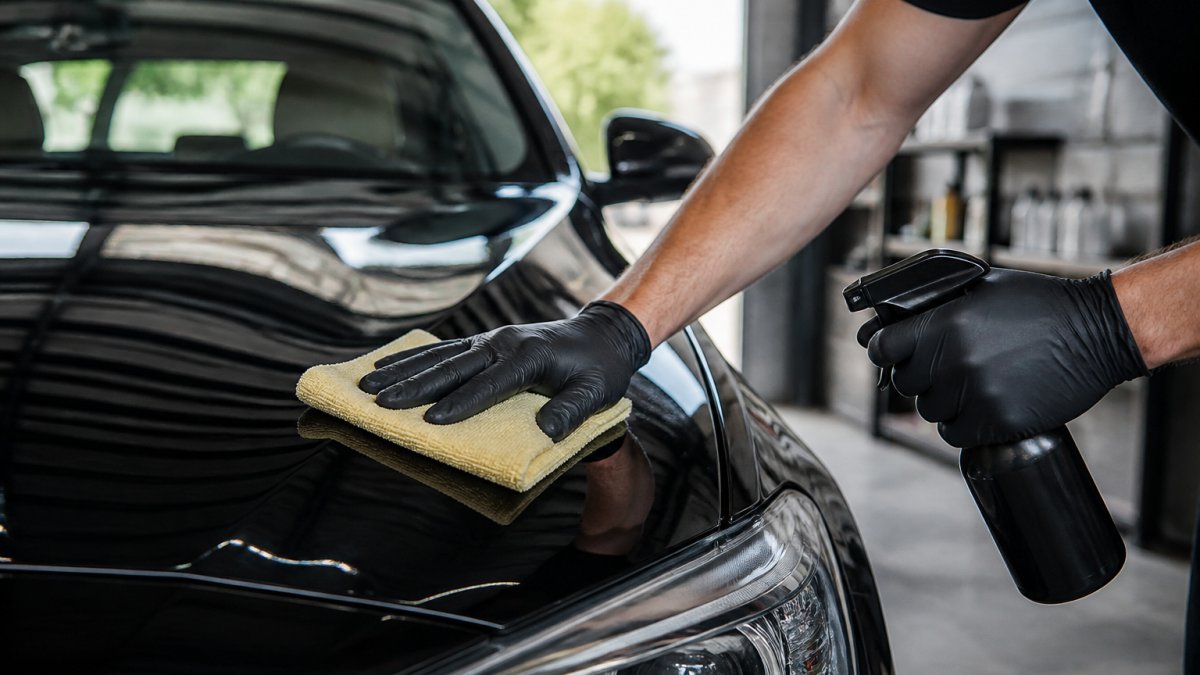
- Dry with a microfiber towel using gentle pressing motions, never rubbing, to avoid friction damage.
- Use distilled water for final rinses in hard-water areas to prevent mineral deposits and water spots.
- Diagnose defects before polishing, swirl marks respond to light polish, but deep scratches and clear-coat failure require professional repair.
- Reapply protective coatings every few weeks for wax, several months for sealant, or every 18-24 months for ceramic coatings.
Table of Contents
- Understanding Mirror Finish Paint and Clear Coat Protection
- How to Wash a Coated Car Without Damaging the Finish
- How to Dry a Car Without Swirl Marks
- How to Prevent Water Spots on Car Paint
- Polishing and Buffing to Restore Gloss
- How Often to Reapply Ceramic Coating and Advanced Protective Systems
- Establishing Your Mirror Finish Paint Maintenance Schedule
- Protecting Your Mirror Finish Investment
- Frequently Asked Questions
Understanding Mirror Finish Paint and Clear Coat Protection
A mirror finish paint is an ultra-glossy automotive coating that reflects light like glass. At Guardian Automotive Coatings, we know that to maintain mirror finish paint requires understanding the layers beneath: your mirror finish sits on a clear coat that guards against UV rays, moisture, and contaminants, and it is the clear coat, not the color layer, that the elements damage.
Mirror finish paint shows every imperfection, water spots, dust, and swirl marks become instantly visible, and without proper care, even a flawless finish dulls within months under intense sun, road salt, and debris.
Guardian Automotive Coatings has analyzed how coating systems perform under Arizona's harsh conditions: our Hybrid Resin Coating maintains greater than 99% integrity after 2,000 hours of UV and moisture exposure, significantly outperforming standard ceramic coatings.
How to Wash a Coated Car Without Damaging the Finish
Washing a coated car correctly is the foundation of mirror finish maintenance.
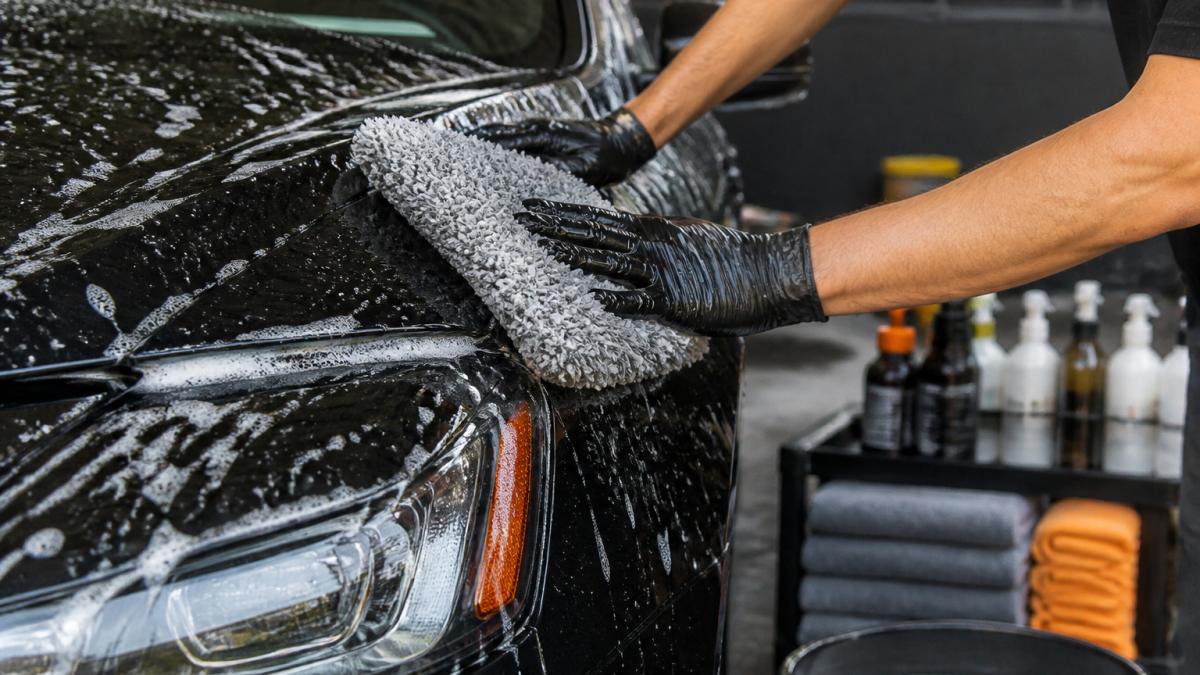
Start with the two-bucket method: one bucket of clean soapy water, one of plain water for rinsing your mitt, so dirt doesn't transfer back onto the paint.
Here's the safe washing sequence:
- Rinse the entire vehicle with water to remove loose dirt
- Dip your microfiber mitt in soapy water
- Wash one small section at a time using gentle circular motions
- Rinse the mitt in clean water after each section
- Rinse the entire vehicle thoroughly with clean water
- Move to the drying stage immediately
Work in small sections so soap doesn't dry on the paint and leave residue.
Never use a brush on your paint, even a soft one, brushes trap dirt particles that scratch the clear coat. Microfiber is the only safe choice.
How to Dry a Car Without Swirl Marks
Drying is where most people accidentally damage their mirror finish. A regular towel or chamois creates friction that generates swirl marks, fine scratches that catch light and destroy reflectivity.
Never rub the paint dry.
For best results, consider these drying options:
- Microfiber drying towels: safest, most affordable option
- Leaf blower: forces water off without touching paint
- Chamois cloth: acceptable if used very gently with light pressure
If beads remain after initial drying, absorb them with a second microfiber towel. The goal is zero friction, any rubbing motion, however gentle, can create microscopic scratches that accumulate over time.
How to Prevent Water Spots on Car Paint
Water spots are mineral deposits left behind when water evaporates on your paint, common in hard-water areas or after rain.
Dry your vehicle completely after every wash, water spots form when water sits on the paint.
Hard water from sprinklers and hoses is a major culprit; if your area has mineral-heavy water, use distilled water for the final rinse.
For existing water spots, use a microfiber cloth with a light detailing spray designed for coated vehicles, never household cleaners, which can damage protective coatings.
Polishing and Buffing to Restore Gloss
Polishing is where mirror-finish owners do the most damage, because it is a subtraction process: every pass permanently thins the clear coat. So the first job is diagnosis, several defects that look like dullness cannot be fixed by polishing, and one can be made dramatically worse.
Diagnose the defect before you polish
Work under a bright, color-neutral light and inspect each panel at a low angle, then straight on, a handheld LED or phone flashlight held at a shallow angle reveals far more than overhead sunlight.
- Water spots (mineral deposits): chalky white rings or outlines that sit on the surface. Fresh spots usually wipe away with a dedicated water-spot remover or a diluted white-vinegar solution on a microfiber towel, followed by a rinse. Etched spots, where the ring no longer wipes off and feels slightly rough, have begun to bite into the clear coat and need light polishing, not more wiping.
- Swirl marks and micro-marring: fine, web-like scratches that appear only under direct light and vanish at other angles. These are almost always wash or dry induced and are the most common reason a mirror finish looks hazy. They respond well to a light polish with a soft foam pad.
- Oxidation: a dull, chalky, sometimes yellowish film, most visible on horizontal panels like the hood and roof. Oxidation is degraded clear coat at the surface and can usually be polished back, but heavily oxidized or thin clear coat should be measured first (see below).
Match the product to the defect and the surface
Polishing products are graded by cut, and using too aggressive a product on a mirror finish is the fastest way to create new defects while removing old ones.
- Light polish / finishing polish: removes swirl marks and restores gloss with minimal clear-coat removal. This is the default for a well-maintained mirror finish.
- Medium polish / compound: removes light scratches and oxidation. Use only when a finishing polish will not do the job, and follow with a finishing polish to refine the surface.
- Heavy compound: for serious correction only. On a mirror finish, this is a professional-level step, not a routine one.
Pad choice matters as much as the product. A soft finishing foam pad with a light polish is the safe combination for a highly reflective surface; firm cutting and wool pads belong to correction work, not maintenance.
The polishing sequence
- Wash, dry, and decontaminate the paint so you are not grinding grit into the surface.
- Inspect and diagnose each panel, marking defects to address.
- Apply three or four pea-sized dots of polish to a soft foam pad for a 2-foot-by-2-foot section.
- With a dual-action polisher on low-to-medium speed, work in overlapping passes until the polish flashes clear. Keep moving, dwelling generates heat and removes clear coat unevenly.
- Wipe residue with a clean, plush microfiber towel and inspect under direct light.
- Repeat only if the defect remains. If two passes of a light polish don't improve it, stop and reassess.
- Finish with a protective sealant or coating to replace the protection you removed.
Work in small sections, keep the pad clean, and stop the moment the defect is gone rather than polishing to a fixed number of passes.
When not to polish
Polishing is the wrong tool in several situations:
- Clear-coat failure or peeling, polishing accelerates the damage.
- A scratch you can feel with a fingernail, polishing will not remove it.
- Paint polished more than once or twice a year, the clear coat is already thin. Use a finishing polish only, or leave correction to a professional.
A mirror finish is maintained by removing as little material as possible, as rarely as possible. Diagnosis first, light polish second, protection last, that order is what separates a finish that stays reflective for years from one that gets polished into failure.
How Often to Reapply Ceramic Coating and Advanced Protective Systems
Protection keeps a mirror finish reflective, but "protection" covers products with very different durability, upkeep, and cost. Choosing the right one, and knowing when to renew it, matters more than any wash technique, because a failing layer lets water spots, UV damage, and contamination reach the clear coat.
Compare the main protection options
The three categories most owners choose between are wax, paint sealant, and ceramic coating.
- Carnauba wax: the traditional choice. It adds warmth and gloss and is easy to apply by hand, but durability is short, typically measured in weeks to a few months depending on sun exposure and washing. Wax also attracts dust and breaks down faster in intense heat. It is a reasonable choice for a garaged vehicle that gets frequent, careful washing, but it demands the most frequent reapplication of the three.
- Paint sealant (synthetic polymer): longer-lasting than wax, generally measured in months rather than weeks, and easier to apply evenly. Sealants are a good middle ground for a daily-driven mirror finish: more durable than wax, less expensive and less demanding than a ceramic coating, and forgiving if you need to reapply.
- Ceramic coating (silica-based): the most durable of the three, typically measured in years rather than months when professionally applied and properly maintained. Ceramic coatings add hardness, strong water beading, and good UV resistance, and they suit a highly polished finish well because they lock in the gloss. The trade-offs are higher upfront cost, a more involved application (often requiring paint correction first and a controlled cure), and the need to use compatible wash products, some harsh soaps and household cleaners degrade the coating.
| Option | Typical durability | Upkeep | Best suited to |
|---|---|---|---|
| Carnauba wax | Weeks to a few months | Frequent reapplication, gentle washing | Garaged, low-exposure vehicles |
| Paint sealant | Several months | Reapply a few times a year | Daily drivers wanting a balance of cost and durability |
| Ceramic coating | Years | Compatible wash products, periodic inspection | Vehicles where gloss retention and UV resistance matter most |
Durability figures vary widely by product, climate, and washing habits, so treat manufacturer claims as best-case. A vehicle parked outside in intense sun and washed weekly will always fall short of a garaged, carefully washed one.
Know the signs it is time to renew
Inspect the protection layer regularly and renew before it fails. Watch for these signals:
- Water no longer beads, it sheets flat, a sign the hydrophobic layer is fading.
- The surface feels rough or grabby after washing, rather than slick.
- Swirl marks appear more easily during washing, meaning the sacrificial layer is thin.
A simple test: after washing, pour clean water over a horizontal panel. Tight, uniform beading means protection is intact; flat or patchy beading means it's time to renew. Check several panels, the hood and roof usually degrade first.
Build reapplication into your routine
A practical cadence for most owners:
- Wax: reapply every few weeks to a few months, more often in high-sun, high-heat conditions.
- Sealant: reapply every several months, and inspect monthly.
- Ceramic coating: inspect every few months and plan for professional renewal on a multi-year cycle, sooner if the vehicle sees heavy sun, road salt, or frequent washing with incompatible products.
Whatever the product, renewal is cheaper than correction: a coating that fails and lets contamination etch the clear coat turns a routine reapplication into a polishing or repaint job. For a mirror finish, keep a sacrificial layer on the paint at all times, the specific product matters less than never letting the clear coat sit unprotected.
Establishing Your Mirror Finish Paint Maintenance Schedule
A consistent routine separates lasting mirror finishes from those that dull prematurely.
Here's a maintenance schedule that works for most coated vehicles:
| Task | Frequency | Time Required |
|---|---|---|
| Wash vehicle | Every 2 weeks | 30-45 minutes |
| Inspect for water spots | Monthly | 10 minutes |
| Light polish (if needed) | Every 6 months | 2-3 hours |
| Full inspection of coating | Every 3 months | 15 minutes |
| Professional reapplication | Every 18-24 months | Professional service |
Adjust the schedule to your situation: wash more often if the vehicle sits in the sun daily, extend intervals if it's garaged. Consistency is the key, regular light maintenance prevents aggressive correction later.
Track your maintenance in a simple log, wash dates, damage you notice, and polishing or professional services, to identify patterns and adjust your routine.
Protecting Your Mirror Finish Investment
Your mirror finish is an investment in both aesthetics and resale value, a well-maintained finish commands higher prices and makes the vehicle more enjoyable to own.
Guardian Automotive Coatings specializes in protection that goes beyond standard ceramic options.
The choice comes down to priorities. Standard ceramic coatings are affordable but cannot be easily repaired.
The effort you invest today directly impacts how your vehicle looks years from now.
Maintaining a mirror finish paint requires the right approach, the right tools, and consistent attention.
Frequently Asked Questions
How often should you wash a car with mirror-finish paint?
Wash your mirror finish paint every two weeks under normal conditions, or every 7-10 days if exposed to heavy dust, road salt, or intense sun. Regular washing prevents contaminants from bonding to the clear coat and maintains the reflective surface integrity. In harsh desert climates, more frequent washing protects against UV damage and mineral deposits.
Can you use wax on coated automotive paint?
Traditional wax is not recommended on advanced coatings like hybrid resin systems, as it can interfere with the coating's protective layer and create uneven finishes. Instead, use maintenance products specifically designed for your coating type. Check with your coating provider about approved cleaners and protectants to avoid compromising the mirror finish quality.
What is the safest way to dry glossy automotive paint?
Use a clean microfiber cloth or chamois leather to dry the surface gently, working in straight lines rather than circular motions to prevent swirl marks. Avoid air-drying, which allows water spots and mineral deposits to form on the reflective surface. For best results, dry in the shade and use distilled water for a final rinse to eliminate water mark formation.
How do you remove water spots from a mirror-like paint finish?
Mix equal parts distilled water and white vinegar or use a dedicated water spot remover designed for coated finishes. Apply with a soft microfiber cloth using gentle circular motions, then rinse thoroughly with distilled water and dry immediately. For stubborn mineral deposits, use a pH-neutral car cleaner followed by a microfiber buff to restore the glossy, reflective appearance without damaging the clear coat.


