Hybrid Resin vs Ceramic Coating Durability
Table of Contents
- Understanding Hybrid Resin and Ceramic Coatings
- How Long Does Ceramic Coating Last
- Durability Head-to-Head: UV Protection and Environmental Resistance
- Can Resin Coating Be Applied Over Car Paint
- Ceramic Coating Maintenance and Upkeep Requirements
- Ceramic Coating vs Spray Coating: What's the Difference
- When to Reapply and Failure Signs
- Frequently Asked Questions
Last Updated: October 11, 2026
Understanding Hybrid Resin and Ceramic Coatings
Choosing between hybrid resin vs ceramic coating durability requires understanding what each technology does and how long it lasts under real-world conditions. The differences between these systems matter far more than most vehicle owners realize.
What Hybrid Resin Coatings Are
Hybrid resin coatings combine polymer and resin chemistry to bond directly to your clear coat, creating a durable, cross-linked network that resists UV damage, chemical exposure, and abrasion.
The resin component allows for flexibility and repairability, damage can often be repaired without stripping the entire layer. Guardian Automotive Coatings applies hybrid resin coatings that maintain greater than 99% integrity after 2,000 hours of UV and moisture exposure.
What Ceramic Coatings Are
Ceramic coatings are inorganic layers based on silicon dioxide (SiO2) that create a glass-like barrier and bond to your clear coat, leaving behind a hard, crystalline layer.
Ceramic coatings are marketed as permanent or semi-permanent and cannot be repaired locally if damaged. They offer excellent initial gloss and hydrophobicity, with water beading visible immediately after application.
SiO2 chemistry provides strong initial chemical resistance, but UV protection varies based on formulation and additives. Many ceramic coatings rely on UV absorbers that deplete over time rather than providing inherent UV resistance.
How Long Does Ceramic Coating Last
Ceramic coating durability depends on exposure conditions, maintenance, and how you define failure. Most manufacturers claim 1 to 5 years, but this obscures the real variables that determine when protection stops.
Defining Ceramic Coating Failure
Hydrophobicity loss is the first failure indicator. When water contact angle drops below 90 degrees, the water-repellent barrier has begun to break down, typically 12 to 24 months under moderate conditions, or as little as 6 months under harsh exposure.
Gloss retention degradation follows hydrophobicity loss. Below 70% gloss retention, the coating has entered visible decline, typically 18 to 36 months after application.
How Environmental Conditions Change Lifespan
The 1-5 year range exists because real-world durability varies dramatically by location and use:
High-UV environments accelerate ceramic coating degradation. Vehicles in the Southwest or high-elevation areas typically see hydrophobicity loss within 12 to 18 months, as UV radiation breaks down the SiO2 layer and depletes UV absorber additives.
Salt-spray exposure degrades ceramic coatings faster than inland environments. Vehicles in coastal zones show measurable coating failure 6 to 12 months earlier than those in dry, salt-free environments.
Wash frequency and technique directly impact lifespan. Weekly pH-neutral washing maintains coatings longer; improper washing with pressure washers or harsh detergents accelerates degradation. A properly washed vehicle may retain 80% gloss after 24 months; one washed with a pressure washer may drop to 60% gloss.
Garage storage versus outdoor parking creates a 20-30% difference in coating lifespan. Garaged vehicles may retain protection for 3 to 4 years; outdoor vehicles typically require reapplication within 18 to 24 months.
Real-World Lifespan by Scenario
Best-case scenario (garage storage, dry climate, weekly pH-neutral washing, minimal highway driving): 4 to 5 years before hydrophobicity is noticeably lost; 5+ years before gloss retention drops below 75%.
Typical scenario (outdoor parking, mixed climate, bi-weekly washing, regular highway driving): 2 to 3 years before hydrophobicity loss becomes apparent; 3 to 4 years before gloss retention drops below 70%.
Harsh scenario (coastal or high-salt environment, outdoor parking, weekly washing, frequent highway driving): 12 to 18 months before hydrophobicity loss; 18 to 24 months before gloss retention drops below 65%.
Why Manufacturer Claims Often Exceed Real-World Performance
Manufacturers typically test ceramic coatings under controlled laboratory conditions: consistent temperature, no UV exposure, no salt spray, no washing cycles. These accelerated tests measure how long the coating can last under ideal conditions, not how long it will last on your vehicle. Real-world conditions, UV, thermal cycling, moisture, contaminants, and washing, degrade coatings faster than laboratory protocols predict.
Additionally, many manufacturers define "durability" as the coating remaining on the vehicle, not as the coating maintaining its protective properties. A ceramic coating can be physically present on your paint for 5+ years while its hydrophobic and chemical-barrier properties have degraded to near-zero after 2 years.
Durability Head-to-Head: UV Protection and Environmental Resistance
Comparing hybrid resin and ceramic coating durability requires understanding what durability actually means and how it's measured. Generic lifespan claims obscure the real differences in how these coatings protect your paint under specific environmental stresses.
UV Exposure and Color Fading
Under accelerated UV testing (ASTM G154), hybrid resin coatings retain a high percentage of original gloss after 1,000 hours; ceramic coatings retain less. The difference reflects hybrid resin's inherent UV absorption versus ceramic coatings' reliance on depleting UV absorber additives.
In high-UV environments, ceramic-coated vehicles may show visible fading within 18 to 24 months; hybrid resin-coated vehicles maintain vibrant color for extended periods. Ceramic coatings may enter decline faster, potentially requiring earlier reapplication.
Chemical and Salt Resistance
Under salt-spray testing (ASTM B117), hybrid resin coatings demonstrate robust resistance; ceramic coatings may show failure earlier. The polymer matrix's water-barrier properties can outperform the SiO2 layer, which may become permeable as it ages.
In coastal environments, ceramic-coated vehicles may show failure within 12 to 18 months; hybrid resin can maintain protection for longer periods. Road salt accelerates SiO2 degradation and depletes UV absorbers faster than in salt-free environments.
Scratch and Abrasion Resistance
Under abrasion testing (ASTM D4060), ceramic coatings are harder but brittle, showing significant gloss loss after a certain number of cycles. Hybrid resin coatings are slightly softer but flexible, maintaining a high percentage of gloss after more cycles compared to ceramic.
Ceramic coatings' brittleness means even proper washing can cause micro-scratching; hybrid resin flexes under pressure without cracking. A ceramic-coated vehicle may show visible scratching within a certain timeframe; hybrid resin typically remains scratch-free for longer periods.
Hydrophobicity Retention
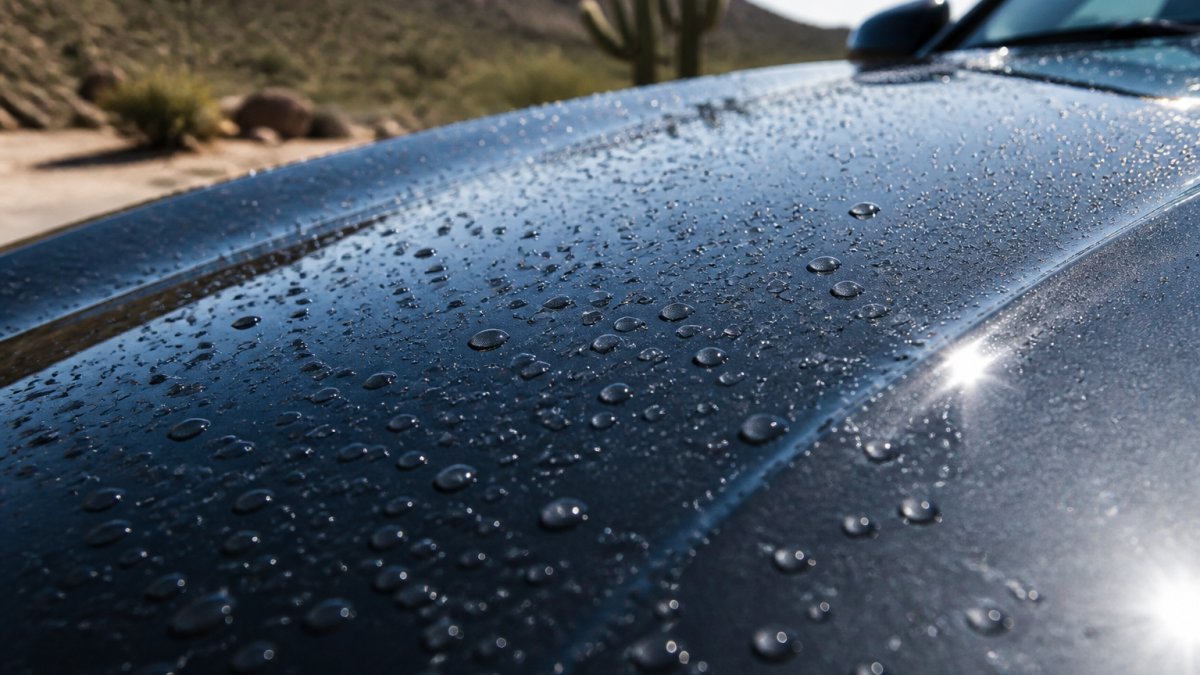
Ceramic coatings start at a certain contact angle and may drop below 90 degrees within 24 months. Hybrid resin starts at a similar contact angle and can maintain a high contact angle after 24 months, as the polymer matrix resists surface degradation.
What this means in practice: When water stops beading on your ceramic-coated paint and instead sheets or pools, the coating's protective barrier has begun to fail. This typically occurs 18 to 24 months after application. With hybrid resin, water beading remains visible for an extended period, giving you a longer window before reapplication becomes necessary.
Can Resin Coating Be Applied Over Car Paint
Hybrid resin coatings can be applied over existing car paint, but surface preparation is critical for long-term adhesion and performance. The paint surface must be clean, decontaminated, and properly prepared before application.
Paint correction is often necessary before applying hybrid resin coatings. This involves removing oxidation, swirl marks, and minor scratches that could compromise the coating's appearance once applied.
Most professional applications include a decontamination wash, clay bar treatment, and paint correction before the hybrid resin coating is applied. This multi-step process ensures maximum adhesion and optimal gloss results.
Ceramic coatings follow similar preparation protocols. The difference is that ceramic coatings are permanent once applied, making surface preparation even more critical. Any imperfections in the paint will be locked under the ceramic layer permanently.
Ceramic Coating Maintenance and Upkeep Requirements
Maintaining ceramic coatings requires consistent effort to preserve their protective properties. Regular washing with pH-neutral shampoo prevents the accumulation of contaminants that degrade the coating.
Ceramic coatings lose their hydrophobic properties as they age. Once water no longer beads on the surface, the coating's protective barrier has begun to fail.
Professional ceramic coating maintenance services, including periodic resealing or top-coat applications, can extend the lifespan somewhat. However, these services add to the total cost of ownership and don't prevent the fundamental degradation that occurs over time.
Hybrid resin coatings typically require less intensive maintenance because they maintain their protective properties longer. Regular washing with appropriate products preserves the coating, but the protection doesn't degrade as rapidly as ceramic coatings.
Ceramic Coating vs Spray Coating: What's the Difference
Spray sealants and traditional wax represent older protection technologies that differ significantly from ceramic coatings. Understanding these differences helps clarify why ceramic coatings became popular despite their limitations.
Traditional spray sealants and wax provide temporary protection lasting weeks to months. They sit on top of the clear coat without bonding chemically, which means they wash off gradually with each cleaning cycle. Reapplication is frequent and labor-intensive.
Ceramic coatings bond chemically to the clear coat, creating a harder, longer-lasting barrier than spray sealants. This chemical bonding is why ceramic coatings became the standard for professional paint protection.
The key distinction is bond strength and longevity. Spray sealants are temporary. Ceramic coatings are semi-permanent. Hybrid resin coatings offer long-lasting protection while maintaining repairability that ceramic coatings may lack.
When to Reapply and Failure Signs
Recognizing coating failure signals helps you decide when reapplication is necessary. The first sign of ceramic coating degradation is loss of hydrophobicity.
Gloss fading and color shift indicate that UV degradation is occurring. If your paint looks duller than it did months ago, the coating's protective layer is compromised.
Hazy or cloudy appearance on the coating surface signals advanced degradation. This typically means reapplication is necessary to restore protection.
Hybrid resin coatings show similar failure signs, but they progress more slowly. The extended service life means you reapply less frequently, reducing long-term maintenance burden and cost.
Guardian Automotive Coatings can assess your current coating condition and recommend reapplication timing based on actual degradation rather than guesswork. Professional evaluation ensures you maintain optimal protection without unnecessary reapplication.
Protecting your vehicle's paint from Arizona's harsh sun and environmental stress requires choosing a coating system that actually delivers on durability claims. Guardian Automotive Coatings applies hybrid resin coatings that exceed 660 pounds per square inch in pull-off tests and maintain 99.8% gloss readings, ensuring your vehicle retains its new-looking finish year after year. Get A Quote today to protect your investment with coating technology engineered for lasting performance.
Frequently Asked Questions
What is the main difference between hybrid resin and ceramic coating durability?
Hybrid resin coatings bond at the molecular level with your vehicle's clear coat, creating a protective layer that maintains over 99% integrity after 2,000 hours of UV and moisture exposure. Ceramic coatings form a hard surface layer but rely on silica or siloxane bonding that may degrade faster under intense UV exposure. Hybrid resin coatings offer up to 20 times more UV protection than traditional ceramic coatings, making them a superior choice for vehicles exposed to harsh sun and environmental contaminants.
How long does ceramic coating last compared to hybrid resin coating?
Ceramic coatings typically last for a certain period with proper maintenance, depending on environmental conditions and wash frequency. Hybrid resin coatings provide significantly longer service life due to their superior chemical bonding and UV resistance. In high-exposure environments like intense sunlight and road salt conditions, ceramic coatings may degrade faster, while hybrid resin maintains its protective properties and gloss reading over extended periods.
Can resin coating be applied over existing car paint without preparation?
Proper surface preparation is critical for any coating application. Before applying hybrid resin coating, your paint surface requires decontamination to remove environmental contaminants, paint correction to address existing damage, and thorough cleaning. This ensures the resin bonds effectively with your clear coat. Skipping preparation compromises adhesion and durability. Professional application includes these steps to guarantee the coating achieves its rated performance and maintains its mirror-like finish.
What maintenance does ceramic coating require to maintain durability?
Ceramic coating maintenance involves regular washing with pH-neutral shampoo to remove road salt, dust, and other contaminants that can degrade the coating. Avoid harsh detergents that strip the protective layer. Wash frequency depends on exposure conditions; vehicles in high-dust or salt-spray environments need more frequent washing. Periodic inspection for failure signs like water sheeting loss or gloss diminishment helps determine when reapplication is needed. Proper maintenance extends the coating's service life and preserves the hydrophobicity and gloss.


