Is Hybrid Resin Coating Worth It for a New Car?
Quick Summary
A hybrid resin coating is a liquid protective layer that bonds to a vehicle's factory clear coat, and it is worth considering for new cars that will be kept a long time. Its polymer resin gives flexibility and adhesion, while silicon compounds add gloss and water repellency. Whether it is worth the cost depends on ownership length, how the car is used, and how well the surface is prepared.
- Hybrid resin coatings combine polymer resin chemistry with silicon-based compounds to form a bonded film.
- Unlike traditional sealants, a hybrid resin coating bonds to the clear coat rather than sitting on top of it.
- Coat fresh factory paint only after the clear coat is inspected and decontaminated, since it keeps curing after build.
- Avoid washing, rain exposure, and wax for the curing period the manufacturer specifies.
- Paint correction is usually the largest line item in a professional quote, so confirm which preparation steps are included.
Table of Contents
- Is Hybrid Resin Coating Worth It for a New Car?
- What a Hybrid Resin Coating Is and How It Differs From Ceramic
- Protection and Gloss Benefits for Brand-New Paint
- Hybrid Resin Coating Durability and Protection Limits
- Preparing New Paint and the Application Process
- DIY Ceramic Coating vs Professional Resin Application
- What Professional Car Paint Protection Costs and Where Value Comes From
- Repairs, Reapplication, and Warranty Questions to Ask Before Booking
- Booking a Hybrid Resin Coating Consultation for Your New Car
- Frequently Asked Questions
Is Hybrid Resin Coating Worth It for a New Car?
Last Updated: November 10, 2026
A hybrid resin coating is a liquid protective layer that bonds to a vehicle's factory clear coat, and it is one of the more durable options available to new-car owners in the United States. Hybrid resin coatings are applied to vehicles in Arizona, where intense UV exposure and dust put heavy demands on paint. Whether a hybrid resin coating is worth the investment depends on how long you plan to keep the car, how it is used, and how well the surface is prepared before application.
The answer below is a starting point, and the details that follow explain the trade-offs. Hybrid resin coating for new cars is a protection choice, not a cosmetic upgrade alone, and the decision should rest on protection, gloss, maintenance, and cost together.
What a Hybrid Resin Coating Is and How It Differs From Ceramic
A hybrid resin coating is a protective layer that combines polymer resin chemistry with silicon-based compounds to form a bonded film over the paint. Ceramic coatings rely mainly on silicon dioxide (SiO2). Hybrid resins blend organic and inorganic components, which is why the two products are often compared directly.
The chemistry matters because it drives behavior. The resin portion contributes flexibility and adhesion, so the film can move with the clear coat as the panel expands and contracts in heat and cold. The silicon portion contributes hardness, gloss, and water repellency. A traditional sealant, by contrast, is a wax or polymer layer that sits on top of the paint rather than bonding to it, which is why it wears away faster.
Hybrid resin, ceramic, and traditional sealant compared
Three categories of paint protection are common on new vehicles:
| Type | Core Chemistry | Typical Strength | Main Limitation | Best Fit |
|---|---|---|---|---|
| Hybrid resin | Polymer resin with silicon compounds | Flexibility, UV resistance, repairability | Requires careful application and controlled curing | Owners who want long protection with the option to repair and reapply |
| Ceramic coating | Silicon dioxide-based | Hardness and gloss | Can be less forgiving on impact; harder to spot-repair | Owners who prioritize maximum gloss and hardness |
| Traditional sealant | Synthetic or natural wax polymers | Easy to apply, low upfront cost | Shorter lifespan; needs frequent reapplication | Lease holders and short-ownership buyers |
Traditional sealants are generally simpler to apply, but they typically need more frequent reapplication. Ceramic coatings offer strong hardness and a glossy finish. Hybrid resin coatings aim to combine durability with flexibility.
How the three behave on brand-new paint
New factory paint is a multi-layer system: primer, color coat, and clear coat. If you are wondering whether a resin coating can go over factory paint, the answer depends on the clear coat's condition. The clear coat is what a coating bonds to, and it continues to outgas and harden for a period after the vehicle is built. A coating applied to fresh clear coat generally needs the surface decontaminated first, and new paint should be inspected and prepped before coating.
Watch out: a paint sealant or wax already on the car may need to be removed and the surface decontaminated before coating.
Protection and Gloss Benefits for Brand-New Paint
New paint is still curing in its first months, so protection matters early. A coating applied to fresh factory paint can help shield it from UV exposure, bird droppings, and road grime.
Gloss is the most visible benefit. A properly applied hybrid resin coating adds depth and reflectivity, and it can make paint color look richer.
Hybrid Resin Coating Durability and Protection Limits
Durability is the central question for most buyers. No coating is permanent. Environmental exposure, washing habits, and parking conditions all affect how long protection lasts.
What the 2,000-hour UV and moisture test does and does not show
A 2,000-hour test runs a sample under controlled UV and moisture conditions. It shows how a coating holds up in a lab setting. It does not reproduce every real-world condition, such as tunnel car washes, road salt, or repeated abrasive contact. Ask the provider for the specific test standard and conditions used. A test result is most useful when it is independently conducted and clearly described.
Preparing New Paint and the Application Process
Preparation determines much of the outcome. The surface must be clean, free of contamination, and properly decontaminated before any coating is applied. Factory paint may have residue from the manufacturing process, so a paint decontamination step is standard in professional work.
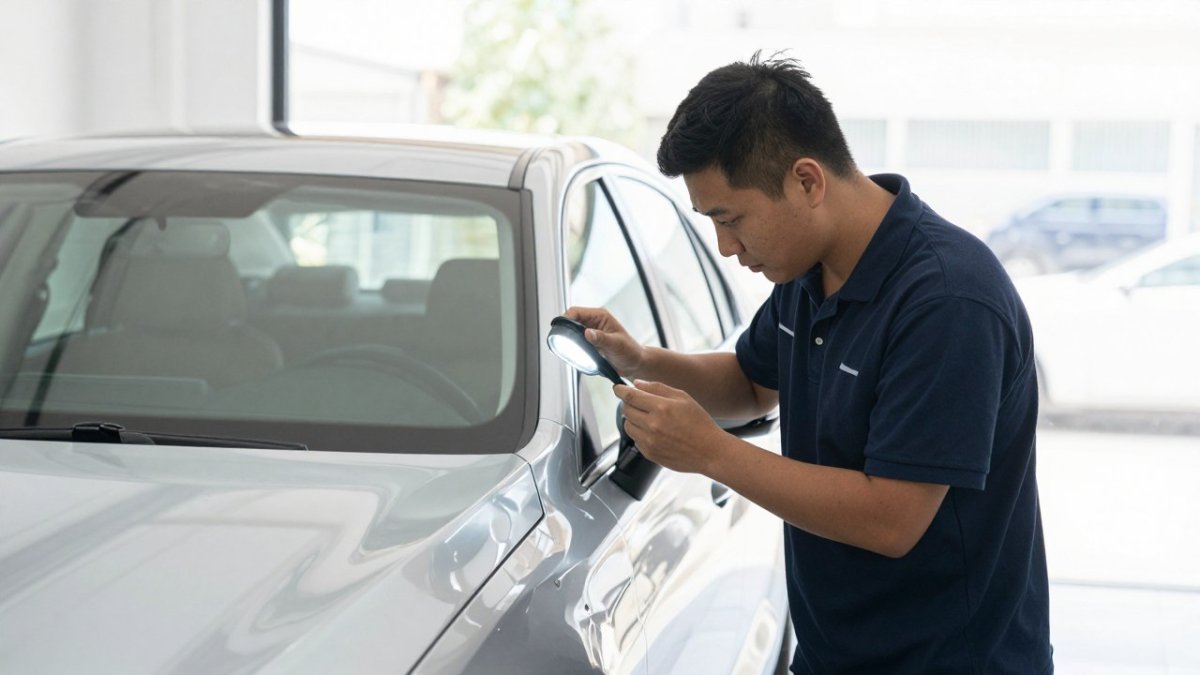
A technician in a bright indoor detailing bay carefully inspects the glossy paint of a new silver sedan under a work light before any product is applied.
Curing requirements and what to avoid afterward
Curing takes time, and the coating needs protection during this window. Avoid washing the vehicle, exposing it to rain, or applying wax for the period the manufacturer specifies. Automatic tunnel washes with harsh brushes should also be avoided during early curing. Ask your provider for the exact curing schedule for your specific product.
DIY Ceramic Coating vs Professional Resin Application
Professional resin application typically includes paint correction, decontamination, controlled curing conditions, and documented procedures. Professional work generally costs more, but it reduces the risk of application errors that can compromise protection. For owners who want a predictable result on a new vehicle, professional application is usually the lower-risk choice.
What Professional Car Paint Protection Costs and Where Value Comes From
Pricing depends on vehicle size, paint condition, and the level of preparation required. For current prices or a quote, contact Guardian Automotive Coatings through its website.
What drives the price
Several variables affect the final quote:
- Vehicle size and panel count. A compact sedan has less surface area to prep, coat, and cure than a full-size truck or a three-row SUV. More panels means more labor hours.
- Paint condition. A new car with clean, uncontaminated clear coat needs decontamination but little correction. A car that sat on a lot, was washed with a dirty mitt, or picked up rail dust may need a one- or two-step polish before coating, and that correction is the largest line item in most quotes.
- Level of correction. A light polish to remove wash marring is one price; a multi-stage correction to remove deeper defects is another. Ask which stage your quote includes.
DIY versus professional: the real cost comparison
Professional application typically includes paint correction, decontamination, controlled curing conditions, and documented procedures. Professional work generally costs more, but it reduces the risk of application errors that can compromise protection. For owners who want a predictable result on a new vehicle, professional application is usually the lower-risk choice.
Where the value actually comes from
Maintenance is part of total cost of ownership, too. A coated car still needs periodic washing with a pH-neutral shampoo and, depending on the product, a coating-specific maintenance spray or topper. Budget for those consumables and for an annual inspection if the warranty requires one.
Confirm in writing which preparation steps are included in any quote before comparing prices.
Repairs, Reapplication, and Warranty Questions to Ask Before Booking
Before committing to any coating, ask specific questions:
- Can the coating be repaired? Ask whether the coating allows repairs and reapplications, and confirm the process and any associated costs.
- What warranty applies? Ask for the terms in writing, including what is covered and for how long.
- What maintenance is required? Learn the recommended washing methods and products.
- Is reapplication possible later? Confirm how the coating can be refreshed when protection declines.
Asking these questions before booking helps you compare providers on terms that matter over the life of the coating.
Booking a Hybrid Resin Coating Consultation for Your New Car
A consultation is a useful next step if you are weighing hybrid resin coating for a new vehicle. Guardian Automotive Coatings can be contacted for a quote. Request a quote from Guardian Automotive Coatings to compare the protection and cost against your priorities.
Frequently Asked Questions
What is a hybrid ceramic coating?
A hybrid ceramic coating blends silicon-based polymers with ceramic-type chemistry to form a thin protective layer bonded to the clear coat. Performance depends on the specific product, surface preparation, and application. Ask for the test method and conditions before comparing products, and check current pricing directly with Guardian Automotive Coatings.
Can resin coating be applied over factory car paint?
Yes, a resin coating can generally be applied over factory clear coat once the surface is clean and free of contamination. New paint should be fully cured before any coating is applied, since coating over paint that is still off-gassing can trap solvents and cause defects. Guardian Automotive Coatings can be contacted for a quote.
Is a DIY ceramic coating as durable as a professional resin application?
Durability in real conditions depends on surface prep, application quality, and maintenance. Compare the test data each product publishes and ask providers to explain their preparation steps.


