Paint Protection for High-Value Vehicles: 2026 Guide
Last Updated: October 23, 2026
Quick Summary
Paint protection for high value vehicles preserves the original factory finish, maintains resale value, and keeps your investment looking new against daily damage from road debris, UV exposure, and environmental contaminants. The best time to apply protection is immediately after purchase, before micro-damage accumulates.
- Paint protection film prevents rock chips and impacts, while ceramic coating adds gloss and water beading but doesn't stop impacts.
- Quality PPF lasts 7-10 years under normal conditions, with 7 years expected in intense Arizona sun before yellowing begins.
- Hybrid resin coatings provide up to 20 times more UV protection than ceramic coatings and maintain greater than 99% integrity after 2,000 hours of UV and moisture exposure.
- Coverage tiers range from track pack impact zones to full body protection, with costs varying by vehicle complexity, paint condition, and film grade.
- Maintain protection with pH-neutral hand washes every two to four weeks, prompt contamination removal, and documented inspections to preserve resale value.
Table of Contents
- Why Paint Protection Matters for High-Value Vehicles
- Paint Protection Film vs Ceramic Coating: Which Delivers Real Protection
- Does Ceramic Coating Prevent Paint Fading in Intense Sun
- Paint Protection Film Cost and Coverage Options for Luxury Vehicles
- How Long Does Paint Protection Film Last Under Real Conditions
- Hybrid Resin Coatings: Superior Protection for Collectors and Enthusiasts
- Maintenance, Repair, and Long-Term Value Protection
- Frequently Asked Questions
Why Paint Protection Matters for High-Value Vehicles
For luxury vehicle owners, paint protection for high value vehicles represents both aesthetic pride and resale value. A single rock chip or UV fade can cost thousands to repair. Paint protection for high-value vehicles isn't optional, it's essential insurance against the elements.
Desert sun, road debris, and environmental contaminants attack paint daily, and luxury cars demand flawless finishes. A scratch on a $100,000 car matters differently than one on a $20,000 sedan.
The better approach is preventing damage before it starts.
Paint protection for high-value vehicles serves three critical functions: it preserves the original factory finish, maintains resale value, and keeps your investment looking new. Whether you drive daily or store your vehicle seasonally, the right protection system adapts to your situation.
Paint Protection Film vs Ceramic Coating: Which Delivers Real Protection
These two approaches dominate the market but solve different problems, and understanding the distinction changes your decision.
Paint protection film (PPF) is a physical barrier: a clear polyurethane layer applied directly to the paint.
Ceramic coating is a chemical bond that creates a hard, glossy layer which beads water and resists scratches, enhancing shine and easing cleaning.
The real difference: PPF is armor. Ceramic is polish.
For high-value vehicles, this distinction matters enormously. A collector car sitting in a garage benefits more from ceramic's gloss enhancement and ease of maintenance.
Many owners choose both: PPF on high-impact zones (hood, fenders, bumpers, mirrors) and ceramic on the rest, maximizing protection where it's needed while keeping a mirror-like finish across the vehicle.
Guardian Automotive Coatings offers hybrid resin coatings that combine impact resistance with ceramic-level gloss.
| Protection Type | Primary Benefit | Best For | Maintenance |
|---|---|---|---|
| PPF | Rock chip prevention | Daily drivers, high-traffic areas | Occasional washing |
| Ceramic Coating | Gloss and water beading | Show cars, garage storage | Regular detailing |
| Hybrid Resin | Impact + gloss + repairability | Luxury vehicles, all conditions | Professional care |
Does Ceramic Coating Prevent Paint Fading in Intense Sun
The answer is more nuanced than most guides admit.
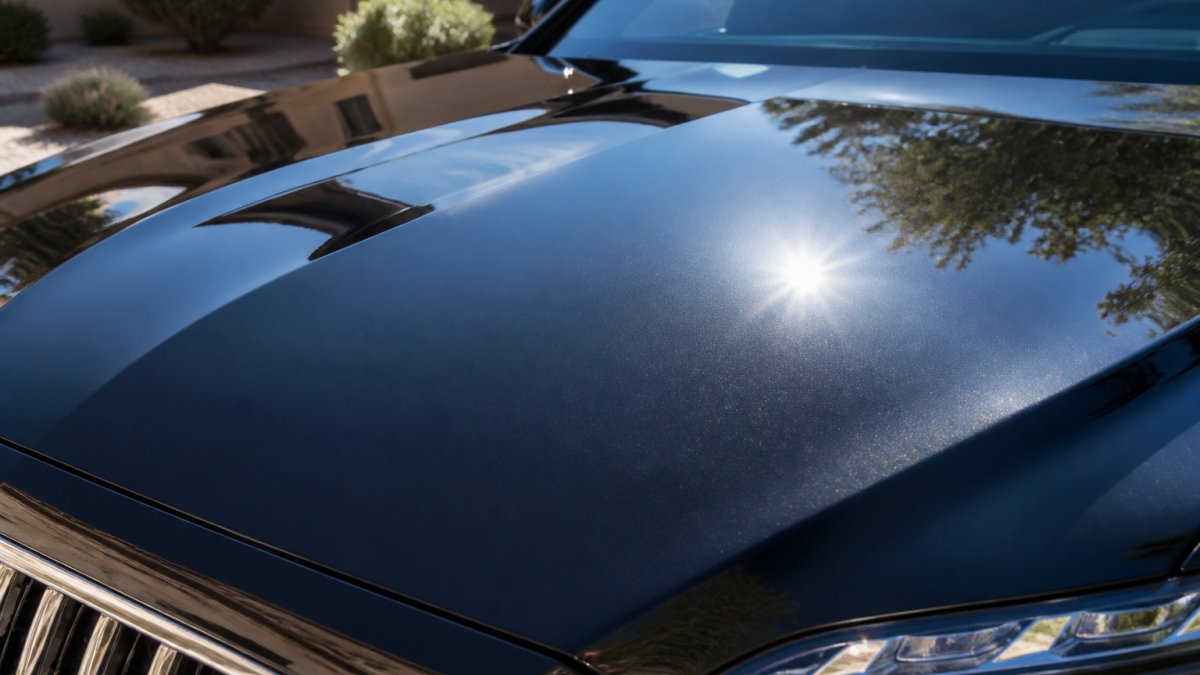
Ceramic coating provides moderate UV protection. The hard layer reflects some sunlight and creates a barrier against oxidation. But it doesn't prevent fading entirely.
Arizona's UV exposure is among the harshest in the country, and standard ceramic coatings begin degrading after 2-3 years in direct sun, not catastrophically, but gloss readings drop and protective properties diminish.
Guardian Automotive Coatings' hybrid resin technology offers up to 20 times more UV protection than ceramic coatings. This isn't marketing hyperbole, it's independently tested performance.
The practical implication: if your vehicle sits in direct sun regularly, standard ceramic coating alone won't preserve your paint the way you expect. You need a high-performance hybrid resin system designed specifically for intense sun environments.
Paint Protection Film Cost and Coverage Options for Luxury Vehicles
Most guides quote a single national average that ignores coverage area, vehicle complexity, and paint condition.
Installed PPF pricing is driven by four variables: square footage of film, number of complex curves (bumpers, mirrors, fender vents, spoilers), whether the film is plotter pre-cut or hand-trimmed, and how much paint correction is required first. A daily-driven luxury sedan and a low-slung exotic can differ by thousands for the same nominal "full front" package.
A practical way to think about coverage tiers:
- Track pack / impact zones. Hood leading edge, front bumper, headlights, mirrors, and the front of the fenders. This is the minimum for a vehicle that sees highway miles and is the tier most owners start with.
- Full front. The entire hood, both fenders, front bumper, headlights, mirrors, and often the A-pillars and roof leading edge. This is the most common choice for daily-driven luxury vehicles because it covers every panel that faces forward road debris.
- Full body. Every painted panel, including doors, roof, trunk, and rear bumper. This is the tier collectors and exotic owners choose when the paint is rare, discontinued, or impossible to repaint to factory match.
Ask any shop for a line-item quote separating film cost, labor, paint correction, and any ceramic top-coat. Be skeptical of a flat rate quoted over the phone without seeing the vehicle, complex curves and existing paint defects are where budgets actually move.
Ownership economics matter as much as the install price. Budget for:
- Initial paint correction. Film locks in whatever is under it. If the paint has swirls or light scratches, they should be corrected first, and that is a separate line item.
- Maintenance washes. pH-neutral hand washes and periodic inspection keep the film clear and prevent contamination from bonding.
- Replacement reserve. Quality film has a finite life (see the lifespan section), so a full-body install should be budgeted as a recurring cost over the years you own the vehicle, not a one-time expense.
- Removal. Professional removal at end of life is its own labor charge and should be planned for, not discovered.
For paint protection for high value vehicles, the cheapest quote is rarely the best economics: a low-cost install using lower-grade film or skipping paint correction can yellow early, lift at seams, or trap contamination, and redoing it costs more than doing it right once.
How Long Does Paint Protection Film Last Under Real Conditions
Quality film lasts remarkably long when properly installed and maintained.
High-grade polyurethane film typically lasts 7-10 years under normal driving conditions. In Arizona's intense sun and heat, expect the lower end of that range, around 7 years before the film begins yellowing or losing its self-healing properties. Self-healing film can recover from minor scratches when heated, but this capability degrades over time.
Lifespan depends on film quality, installation precision, maintenance routine, and environmental exposure: a vehicle stored indoors during summer sees longer film life than one parked outside daily, and highway driving causes less rock chip damage than city streets.
Guardian Automotive Coatings uses premium-grade film that maintains structural integrity longer than budget alternatives, installed with meticulous surface preparation and precise application to extend the protective lifespan significantly.
Film fails gradually: yellowing at the edges first, then slight lifting at seams, at which point removal and reapplication become necessary. Done correctly, removing old PPF doesn't damage the underlying paint.
Many collectors plan for PPF reapplication every 7-10 years as part of their vehicle maintenance routine. It's no different than replacing brake pads or refreshing fluid levels. For a high-value vehicle, this periodic maintenance is a small price for continuous protection.
Hybrid Resin Coatings: Superior Protection for Collectors and Enthusiasts
Hybrid resin technology combines the impact resistance of film with the gloss enhancement of ceramic, while adding repairability neither option offers.
For collectors and enthusiasts, hybrid resin lets a professional repair the damaged area locally without removing the whole coating, protection without extensive downtime.
Guardian Automotive Coatings' hybrid resin coating exceeds 660 pounds per square inch in pull-off tests. This means it won't separate from your paint under normal conditions.
The coating delivers up to 20 times more UV protection than ceramic coatings. For vehicles in intense sun, this difference is measurable and visible. Paint stays vibrant. Gloss persists.
Hybrid resin works exceptionally well for rare paint colors and specialty finishes.
Maintenance, Repair, and Long-Term Value Protection
The best paint protection system only works if you maintain it properly, and for a high-value vehicle the plan should be written down, scheduled, and documented, not improvised.
Wash and inspection cadence. For a coated or filmed high-value vehicle, a common pattern is a pH-neutral hand wash every two to four weeks depending on exposure, with a full inspection at each wash. During inspection, check the leading edges of the hood, the front bumper, mirror caps, and the seams where film terminates. Look for lifted edges, trapped debris lines, yellowing, and any haziness in the clear layer. Catching a lifted edge early lets a shop re-seat it before dirt works underneath.
Failure criteria and replacement timing. Film and coatings fail gradually, not suddenly. Watch for these signals that it's time to plan replacement rather than repair:
- Persistent yellowing that washing and light polishing won't lift.
- Edges that lift repeatedly after re-seating.
- A visible loss of gloss or clarity compared with adjacent panels.
- Self-healing that no longer recovers light scratches with heat.
When two or more of these appear, schedule an inspection with the installer. Planning replacement on your timeline is far cheaper than reacting after a failure.
Safe removal. Professional removal is the only removal: film peeled cold, too fast, or at the wrong angle can pull clear coat with it, especially on older or previously repaired paint.
Documentation for resale. Keep a simple protection log: date of install, film or coating brand and grade, coverage map, every maintenance visit, and any repairs.
Frequently Asked Questions
What is the difference between paint protection film, ceramic coating, wax, and sealant?
Paint protection film (PPF) is a physical polyurethane barrier applied to the paint surface that absorbs impacts from rock chips and debris. Ceramic coatings form a chemical bond with the paint to add hardness and water beading, but offer limited impact resistance. Wax and polymer sealants sit on top of the paint and wash away over time, offering only temporary gloss and water repellency. For high-value vehicles, PPF provides the strongest impact protection, ceramic coatings add gloss and UV defense, and hybrid resin coatings combine durability with repairability superior to standard ceramic options.
How much does paint protection film cost for a high-value vehicle?
Paint protection film pricing depends on vehicle size, coverage area (full body, partial, or specific panels), film quality, and professional installation labor. Luxury vehicles typically require more material and precision application than standard cars. For accurate pricing tailored to your specific vehicle, contact Guardian Automotive Coatings for a detailed quote. Avoid estimating based on generic online figures, as high-value vehicles often have complex curves, rare finishes, or specialty paint that affect final costs.
Does ceramic coating prevent paint fading in intense sun exposure?
Standard ceramic coatings provide some UV protection through their chemical structure, but they do not prevent paint fading entirely, especially under prolonged intense sun exposure like Arizona's conditions. Ceramic coatings typically offer UV protection equivalent to a high-SPF sunscreen for paint, slowing fade but not stopping it completely. Hybrid resin coatings and advanced formulations deliver up to 20 times more UV protection than conventional ceramic coatings, maintaining paint vibrancy and depth far longer. For maximum fade resistance, combine a protective coating with proper storage and maintenance.
Can paint protection actually increase my vehicle's resale value?
Yes. A well-maintained, protected paint finish preserves the vehicle's original appearance and prevents costly repainting, which directly impacts resale value. Buyers of high-value vehicles inspect paint condition closely; swirl marks, fading, and oxidation significantly reduce appeal and price. Professional paint protection that maintains gloss, color depth, and surface integrity, particularly for rare or specialty finishes, can offset or exceed the cost of the protection itself at resale. Documentation of professional protection and maintenance strengthens buyer confidence and justifies premium pricing.


