Why Ceramic Coatings Fail in Desert Heat
Table of Contents
- How Ceramic Coatings Break Down in Extreme Heat
- Ceramic Coating Application Temperature and Curing Failures
- Signs Ceramic Coating Has Failed in Your Vehicle
- Ceramic Coating Lifespan in Extreme Heat Environments
- Ceramic Coating Maintenance in Hot Weather
- Why Hybrid Resin Coatings Outperform Ceramic in Desert Conditions
- Superior Thermal Stability and UV Protection
- Reapplicability and Long-Term Paint Integrity
- Why does ceramic coating fail faster in the desert?
- How long do ceramic coatings last in hot climates?
- Can you fix a failed ceramic coating?
- What's the best protection for desert climates?
- How often should you maintain a ceramic coating in the desert?
- Frequently Asked Questions
Last Updated: October 8, 2026
How Ceramic Coatings Break Down in Extreme Heat
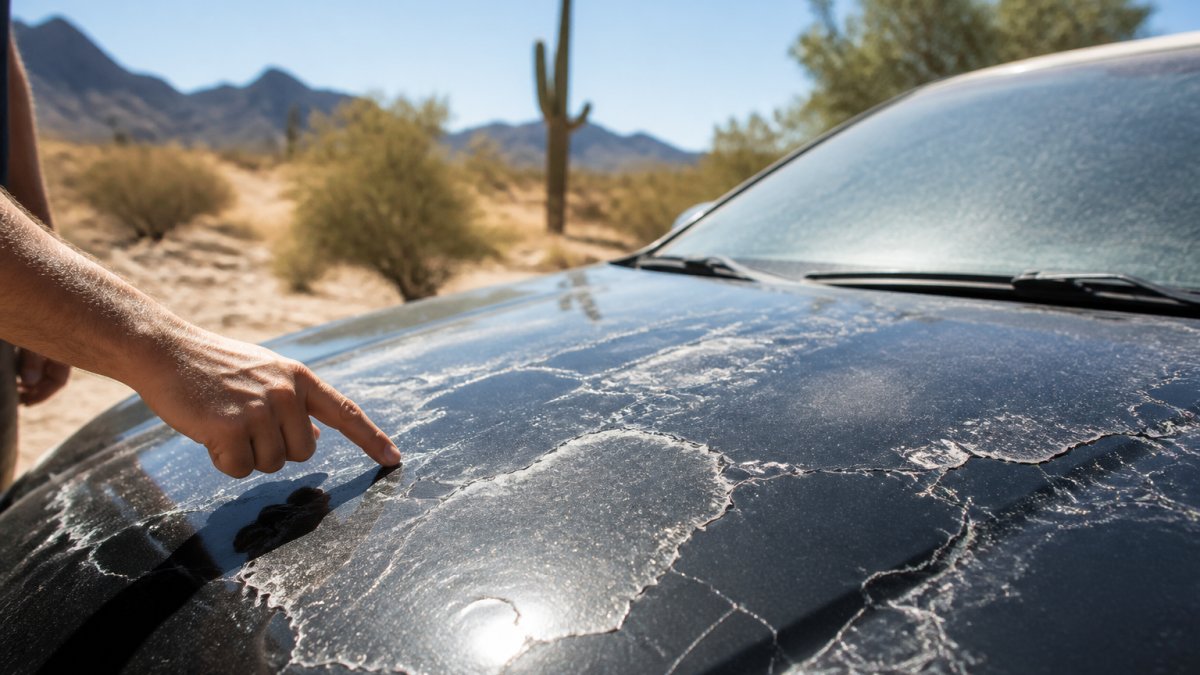
Understanding why ceramic coatings fail in desert heat requires examining how extreme temperature swings and intense UV radiation attack the molecular bonds holding the coating together. It's not just the sun, it's what happens when paint expands and contracts hundreds of times under brutal conditions.
Ceramic coatings rely on a solid molecular bond to protect your paint. When temperatures spike and drop rapidly, that bond gets stressed: the paint underneath expands and contracts at a different rate than the ceramic layer on top. Over time this creates tiny cracks and separation points, invisible at first, but where failure begins.
Thermal Cycling and Paint Stress
Thermal cycling, repeated expansion and contraction from temperature swings, is one of the biggest threats to ceramic coating longevity. In desert conditions your vehicle's surface can reach 140-160°F by day and drop 40-50 degrees at night, hundreds of times per year.
Paint and ceramic coatings expand at different rates. When the paint expands more than the coating, stress builds at the bonding layer because the coating doesn't flex. Eventually micro-fractures form, letting moisture and contaminants seep underneath and breaking the hydrophobic barrier that makes ceramic coatings effective.
The result is progressive failure: the coating doesn't peel off at once but gradually loses protection as the molecular bond deteriorates. Your paint oxidizes faster, beading and sheeting disappear, and gloss fades.
UV Radiation and Molecular Degradation
UV radiation doesn't just fade paint, it breaks apart the polymer chains that give ceramic coatings their strength. Desert environments receive intense UV exposure year-round, attacking the silica-based structure at a molecular level.
When UV hits the coating, it breaks the cross-linking bonds between polymer molecules, photooxidation. The coating becomes brittle, loses flexibility, and can no longer absorb thermal cycling stress. The protective barrier weakens and contaminants penetrate more easily.
The problem compounds: as the molecular structure degrades, the coating can't maintain a hydrophobic surface. Water pools and sits on the paint instead of beading off, accelerating oxidation underneath the failing coating.
Ceramic Coating Application Temperature and Curing Failures
Applying a ceramic coating in extreme heat compromises the curing process. Most coatings require specific ambient humidity and temperature ranges; desert conditions often fall outside them, leading to incomplete cross-linking.
Why Flash Time Matters in Hot Climates
Flash time is the window between application and initial hardening, 30-60 seconds in standard conditions. In desert heat it accelerates dramatically, and the solvent evaporates too quickly for proper molecular bonding.
When flash time is too short, the coating can't establish a complete molecular bond with the paint. Cross-linking is interrupted, producing a coating that looks good initially but lacks the structural integrity to withstand thermal stress. Within months, adhesion fails and it separates.
Heat also stops the coating flowing and levelling properly: liquid polymers set before forming a smooth, uniform layer, creating weak points and uneven protection.
Cross-Linking Issues at High Ambient Humidity
High humidity in desert climates, especially near water or after monsoon seasons, interferes with curing. The coating sheds solvent through evaporation; when humidity rises, evaporation slows and cross-linking stalls.
A coating that doesn't fully cross-link stays porous, lacking the chemical resistance and hydrophobic properties of a healthy coating. Moisture penetrates it, settles at the paint interface, accelerates oxidation, and causes delamination.
Signs Ceramic Coating Has Failed in Your Vehicle
Recognizing failure early can save you from permanent paint damage. Here are the clearest indicators.
Loss of Hydrophobic Beading and Sheeting
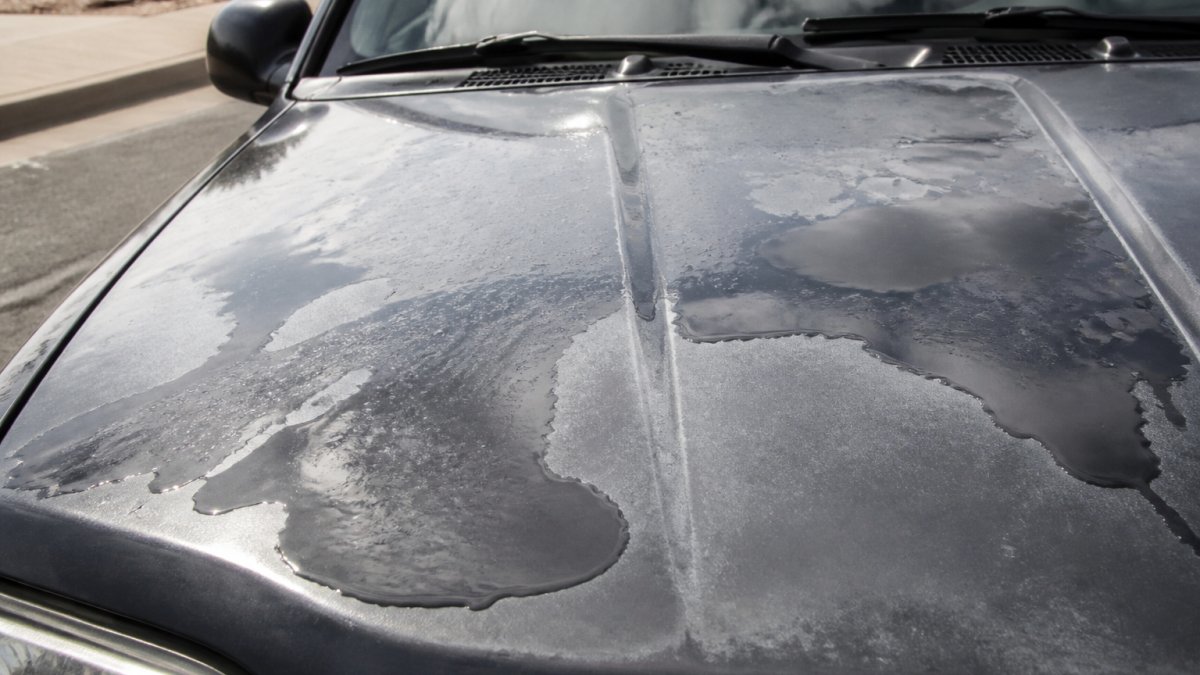
A healthy ceramic coating makes water bead up and roll off in tight droplets. When water instead pools or spreads flat across your paint, the hydrophobic surface is gone.
Loss of beading means the silica-based matrix that repels water is breaking down. Water then sits on the paint longer, increasing water spotting and oxidation risk, often the first visible sign of failure.
Sheeting, where water forms a thin sheet and slides off, is the next stage of hydrophobic loss. When you see neither beading nor sheeting, the coating has lost most of its protective capability.
Paint Oxidation and Coating Degradation Markers
Oxidation appears as a dull, hazy finish or white chalky residue, occurring when the coating no longer shields paint from UV radiation and contaminants. The clear coat underneath oxidizes and loses gloss.
Look for:
- Uneven gloss across the paint surface
- Chalky residue that doesn't wash away easily
- Faded color compared to protected areas like under the hood
- Visible swirls or scratches that weren't there before
These markers mean the coating's protective barrier has failed, leaving paint exposed to direct UV radiation and chemical etching from desert contaminants.
Ceramic Coating Lifespan in Extreme Heat Environments
Most manufacturers claim ceramic coatings last 2-5 years. In desert conditions, thermal cycling, UV intensity, and environmental contaminants accelerate breakdown.
How Thermal Stability Determines Durability
Thermal stability is a coating's ability to maintain its molecular structure under temperature stress. Standard ceramic coatings have moderate thermal stability. They're designed for temperate climates, not extreme heat environments.
In the desert, daily temperature swings overwhelm its structural integrity faster than in cooler climates, and molecular bonds degrade more rapidly under repeated expansion and contraction.
Higher-quality coatings with better thermal stability perform better, but even premium options struggle in extreme desert conditions. The fundamental limitation: ceramic coatings are rigid and don't flex with paint expansion, and that rigidity eventually becomes a liability.
Desert-Specific Contaminants and Chemical Etching
Desert environments contain unique contaminants that attack ceramic coatings chemically: sharp, abrasive dust; highly corrosive salt from dry lake beds and road treatments; and acidic industrial fallout from nearby manufacturing.
These contaminants don't just sit on the surface, they bond chemically with the coating and paint underneath, a process called chemical etching. They eat into the surface, creating microscopic pits and roughness, and the coating loses its smooth, hydrophobic character.
Over time, chemical etching degrades structural integrity from the outside in. Combined with UV degradation from inside, protection fails from both directions at once.
Ceramic Coating Maintenance in Hot Weather
Even with proper maintenance, ceramic coatings struggle in desert heat. But maintenance can extend their lifespan and catch failure early.
Decontamination Protocols for Desert Environments
Regular decontamination removes embedded contaminants before they chemically etch the coating. In desert climates, decontaminate every 2-4 weeks, not every 3-6 months as in temperate areas.
Decontamination involves:
- Rinsing thoroughly with clean water to remove loose dust and debris
- Using a clay bar or decontamination soap to lift bonded contaminants
- Drying completely to prevent water spotting
- Inspecting for oxidation or coating degradation
This removes the sharp particles and chemical deposits that accelerate failure, and lets you catch early degradation before it becomes permanent damage.
Maintenance Frequency and Environmental Factors
In desert climates, increase your maintenance schedule significantly: wash every 7-10 days instead of every 2 weeks, because intense UV exposure and abrasive dust demand more frequent attention.
Key maintenance tasks:
- Weekly wash with pH-neutral soap
- Biweekly decontamination clay treatment
- Monthly inspection for beading loss or oxidation
- Quarterly professional inspection and touch-up if available
This aggressive schedule keeps contaminants from bonding to the coating, extends its effective lifespan, and catches failure before it spreads to larger areas of paint.
Why Hybrid Resin Coatings Outperform Ceramic in Desert Conditions
Hybrid resin coatings address the fundamental weaknesses of ceramic coatings in extreme heat, combining the best properties of resin-based and ceramic technologies for superior desert durability.
Superior Thermal Stability and UV Protection
Hybrid resin coatings have significantly higher thermal stability than standard ceramics, maintaining their molecular structure through extreme temperature swings. The resin component flexes slightly with paint expansion, reducing stress on the bonding layer.
This flexibility is crucial. When paint expands and contracts, a hybrid coating moves with it instead of cracking. The cross-linking remains intact. The hydrophobic barrier stays effective.
Guardian Automotive Coatings' hybrid resin technology maintains over 99% integrity after 2,000 hours of UV and moisture exposure. This level of performance far exceeds what standard ceramic coatings deliver in desert conditions.
UV protection in hybrid resins is also superior: additives absorb and dissipate UV energy before it breaks apart polymer chains, preventing the photooxidation that degrades ceramic coatings. Your paint stays vibrant and protected for years longer.
Reapplicability and Long-Term Paint Integrity
Standard ceramic coatings are permanent once applied. If they fail, you need paint correction or a full repaint. Hybrid resin coatings can be reapplied even after damage.
If a section degrades or gets damaged, you can reapply just that area; the new coating bonds to the existing layer and restores full protection.
Long-term paint integrity improves dramatically with hybrid resin coatings.
Guardian Automotive Coatings' hybrid resin coating delivers a flawless, mirror-like finish with 99.8% gloss reading.
Ceramic coatings fail in desert heat because they can't handle the thermal stress, UV intensity, and chemical contaminants unique to extreme climates.
Guardian Automotive Coatings offers a superior alternative with hybrid resin coating technology.
Why does ceramic coating fail faster in the desert?
Ceramic coatings fail in desert heat due to three combined factors: thermal cycling from extreme temperature swings stresses the rigid structure, intense UV radiation breaks down polymer chains at the molecular level, and desert contaminants like salt and dust chemically etch the surface. Standard ceramic coatings aren't formulated for these conditions.
How long do ceramic coatings last in hot climates?
In desert conditions, expect ceramic coatings to last 12-18 months instead of the advertised 2-5 years. Thermal stress and UV degradation accelerate failure significantly; high-quality options perform slightly better, but they're still too rigid for extreme heat cycling.
Can you fix a failed ceramic coating?
Once a ceramic coating fails, you typically need paint correction or a full repaint, it's permanent and can't be reapplied. That's a major limitation in desert climates where failure is more likely. Hybrid resin coatings, by contrast, can be reapplied even after damage, making them more practical for harsh environments.
What's the best protection for desert climates?
Hybrid resin coatings outperform ceramic coatings in desert environments, offering superior thermal stability, higher UV protection, and reapplicability. Guardian Automotive Coatings' hybrid resin technology maintains over 99% integrity after 2,000 hours of UV exposure and delivers up to 20 times more UV protection than ceramic coatings.
How often should you maintain a ceramic coating in the desert?
Increase maintenance frequency significantly in desert climates: wash every 7-10 days instead of every 2 weeks, decontaminate every 2-4 weeks, and have professional inspections quarterly. This removes contaminants before they chemically etch the coating and catches failure early.
Frequently Asked Questions
Can extreme heat damage ceramic coating?
Yes. Ceramic coatings fail in extreme desert heat due to thermal cycling stress and UV radiation breaking down the molecular bonds. When temperatures exceed 120°F regularly, the coating's cross-linking weakens, reducing hydrophobic properties and allowing paint oxidation. High ambient humidity during application also prevents proper curing, accelerating failure. Hybrid resin coatings maintain thermal stability and UV resistance far better in these conditions.
How do you maintain ceramic coating in hot, sunny conditions?
Regular decontamination removes abrasive dust and chemical residue that accelerate degradation. Wash your vehicle every 2 weeks using pH-neutral soap to prevent environmental contaminants from etching the coating. Avoid direct sunlight during application and curing. In extreme heat, increase maintenance frequency because thermal cycling and UV radiation degrade the coating faster. Monitor for loss of beading and sheeting as early warning signs of failure.
Why does ceramic coating stop beading water?
Loss of beading indicates the hydrophobic surface layer has degraded. UV radiation and thermal stress break down the silica-based ceramic matrix, reducing surface tension properties. Desert environments accelerate this because high temperatures increase solvent evaporation rates during curing, creating weak cross-linking. Once beading stops, water sheets across the surface and contaminants penetrate more easily, leading to paint oxidation and coating failure.
What is better than ceramic coating for protecting car paint?
Hybrid resin coatings offer superior protection in extreme heat. They maintain over 99% integrity after 2,000 hours of UV and moisture exposure, compared to ceramic coatings that degrade much faster. Hybrid resins provide up to 20 times more UV protection and maintain thermal stability in temperatures where ceramic fails. They also allow for repairs and reapplications even after damage, extending paint protection indefinitely rather than requiring complete recoating.


