
How to Remove Mineral Spots From Coated Car Paint
Quick Summary
Mineral spots form when water dries on the paint and leaves dissolved minerals behind. To remove them, first test a gentle, coating-safe cleaner in a small hidden area, then work in shade on a cool panel. Use a soft microfiber towel, rinse thoroughly, and repeat only as needed.
- Mineral spots form when water evaporates and leaves calcium, magnesium and other dissolved solids behind.
- Arizona's heat speeds drying, giving minerals little time to wash away cleanly.
- Test any remover on a small lower panel area before treating the whole vehicle.
- Use one part white vinegar to three or four parts distilled water, with dwell under a minute.
- If spots remain or water stops beading, stop chemical treatment and assess the coating.
Table of Contents
- Why Mineral Spots Form on Coated Paint
- Mineral Deposits Versus Etching: How to Tell Them Apart
- Assessing Spot Severity With a Simple Decision Tree
- Choosing a Water Spot Remover That Is Safe for Ceramic Coating
- Step-by-Step: How to Remove Water Spots on Ceramic Coating
- Water Spots Under Ceramic Coating and What to Do If the Finish Is Weakened
- Preventing Mineral Spots on Your Next Wash
- Booking a Professional Inspection and Protection Review With Guardian
- Frequently Asked Questions
Why Mineral Spots Form on Coated Paint
Last Updated: November 5, 2026
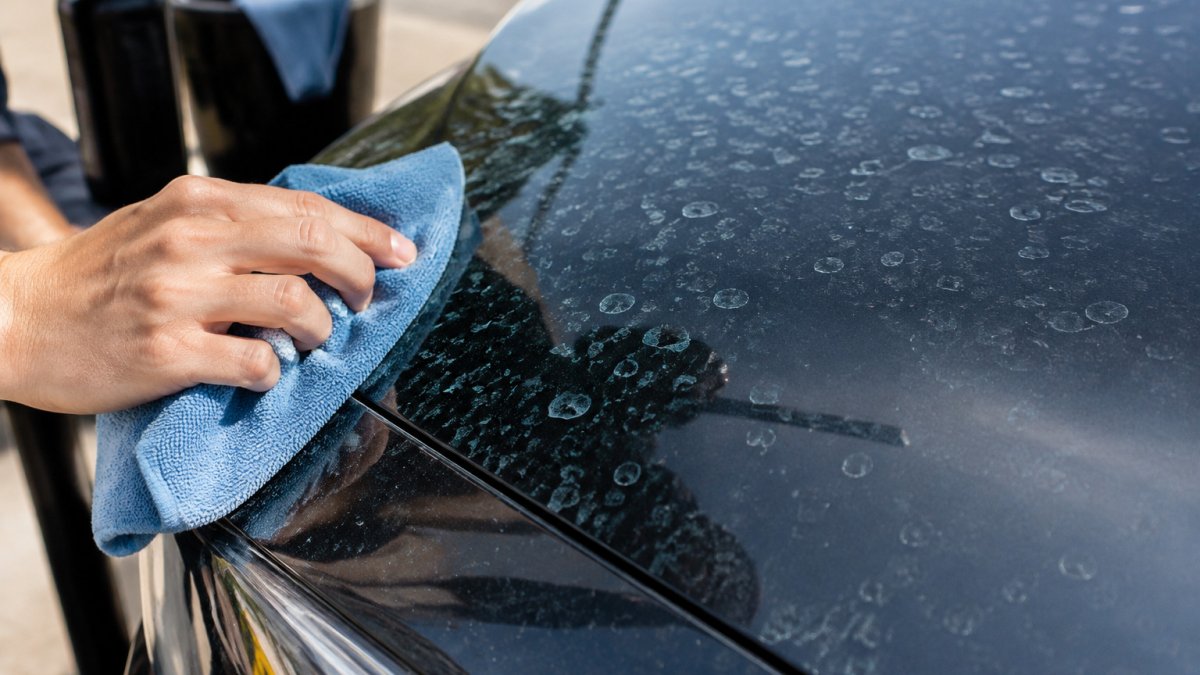
Mineral spots form when water dries on your car and leaves behind the dissolved minerals it carried. These marks can appear quickly on a dark hood in a dry Arizona afternoon, so it helps to understand the cause before you start scrubbing.
Water in many areas contains calcium, magnesium and other dissolved solids (Hardness of Water). When droplets evaporate in direct sun, those minerals are left sitting on the surface. Hard water, sprinkler overspray and rain that dries before you can rinse all contribute.
Arizona's heat speeds this process. Water can dry in minutes on a hot panel, which gives minerals little time to wash away cleanly.
On a coated finish, the spots sit on top of the protective layer. Coatings are designed to repel water and resist staining, but they do not make the surface immune. A thin film of deposit can still bond to the coating, especially if it is left to dry repeatedly.
Common triggers include:
- Washing in direct sun
- Letting sprinklers hit the car
- Rinsing with untreated hard water
- Leaving rain or wash water to air dry
- Drying with a towel that is not fully saturated
Mineral Deposits Versus Etching: How to Tell Them Apart
Mineral deposits and etching can look alike, but they need different treatment. A deposit is material sitting on the surface. Etching means the surface itself has been chemically altered, typically by an acidic or alkaline mineral solution that has had time to react with the coating or the clear coat beneath it. Getting this distinction right is the single most important decision in the whole process, because the wrong call either wastes time on a removable spot or grinds away at permanent damage.
Start with a simple test. Wash the area thoroughly with a pH-neutral car shampoo, dry it, and inspect it under good light, ideally indirect daylight or a bright LED work light held at a low angle. If the spot is still there, check whether it has a raised or crusty texture. Run a clean, wet microfiber towel over it with light pressure. Deposits often feel rough or chalky and may leave a faint white residue on the towel. Etching usually feels smooth but looks like a dull or hazy ring, and the towel comes away clean.
Visual clues matter as much as touch. Deposits tend to have a defined edge and a whitish, crusty center. Etching often shows a darker or duller center with a faint halo, and on dark paint it can look like a shadow that will not wash off. Tilt the panel so light rakes across it: deposits sit on top of the gloss, while etching interrupts the reflection and makes the ring look slightly sunken or hazy.
Watch out: These simple tests have limits. A heavy deposit can feel smooth once it has bonded tightly, and light etching can feel slightly rough if minerals are still sitting in the damaged area. If the spot does not respond to a gentle wash and a coating-safe cleaner, treat it as potential etching until proven otherwise, do not escalate to abrasives on a guess.
A more reliable check is behavior after cleaning. If the spot lightens after a mild chemical treatment and a rinse, it was likely a deposit. If it remains unchanged after two gentle attempts, or if water no longer beads in that area, the coating or clear coat may be etched. At that point, stop chemical treatment and assess the finish before doing anything more aggressive.
Assessing Spot Severity With a Simple Decision Tree
Use this decision tree to choose your starting point:
- Is the spot fresh (dried within the last day or two)? If yes, start with a gentle wash and a quick detailer. If no, go to step 2.
- Does it wipe off with a mild, coating-safe cleaner? If yes, you are dealing with a surface deposit. If no, go to step 3.
- Is the spot faint, rough or chalky? If yes, a coating-compatible mineral remover is the next step. If no, go to step 4.
- Does the spot feel smooth and still show after cleaning? This may be etching or coating damage. Stop aggressive treatment and assess the coating before going further.
This approach keeps you using the least aggressive method that works.
Choosing a Water Spot Remover That Is Safe for Ceramic Coating
Not every remover is safe for a coated finish, and the difference between a product that lifts minerals and one that strips your coating often comes down to concentration and contact time rather than the active ingredient itself. Look for products labeled as coating-compatible or safe for ceramic coating. Check the label for pH information, dilution directions, dwell-time limits, and any warnings about use on coated surfaces.
Avoid strong acids, abrasive compounds, and heavy-duty degreasers unless the product specifically says it is safe for coated paint. When in doubt, contact the coating provider or choose a milder option.
Many people start with diluted white vinegar. It is a mild acid that can loosen light mineral deposits. A common starting point is one part white vinegar to three or four parts distilled water, applied to a cool panel in shade. Use it sparingly, keep dwell time short, generally under a minute for a first pass, and always test it on an inconspicuous area first. Distilled water matters here: mixing with hard tap water can add the very minerals you are trying to remove.
Application conditions are as important as the product. Work in shade on a cool surface, never on a hot panel or in direct sun. Apply to a small area, let the product dwell only as long as the label recommends, and do not let it dry on the paint, drying concentrates the acid or chelating agent and increases the risk of dulling the coating. Agitate gently with a soft microfiber towel, then rinse thoroughly with clean water and dry completely before inspecting.
Watch out: Dwell time and dilution are where most damage happens. A product that is safe at a 30-second dwell can dull a coating if left for several minutes, and a concentrate meant to be diluted can etch if used at full strength. Follow the label exactly, and never assume a longer dwell will work better.
Coating type changes the advice. Wax and sealant finishes are softer and can be stripped by the same products, so use the mildest option and expect to reapply protection afterward. If you are unsure which finish you have, treat it as the most delicate type until you confirm.
Step-by-Step: How to Remove Water Spots on Ceramic Coating
Follow these steps in order. Do not skip the test.
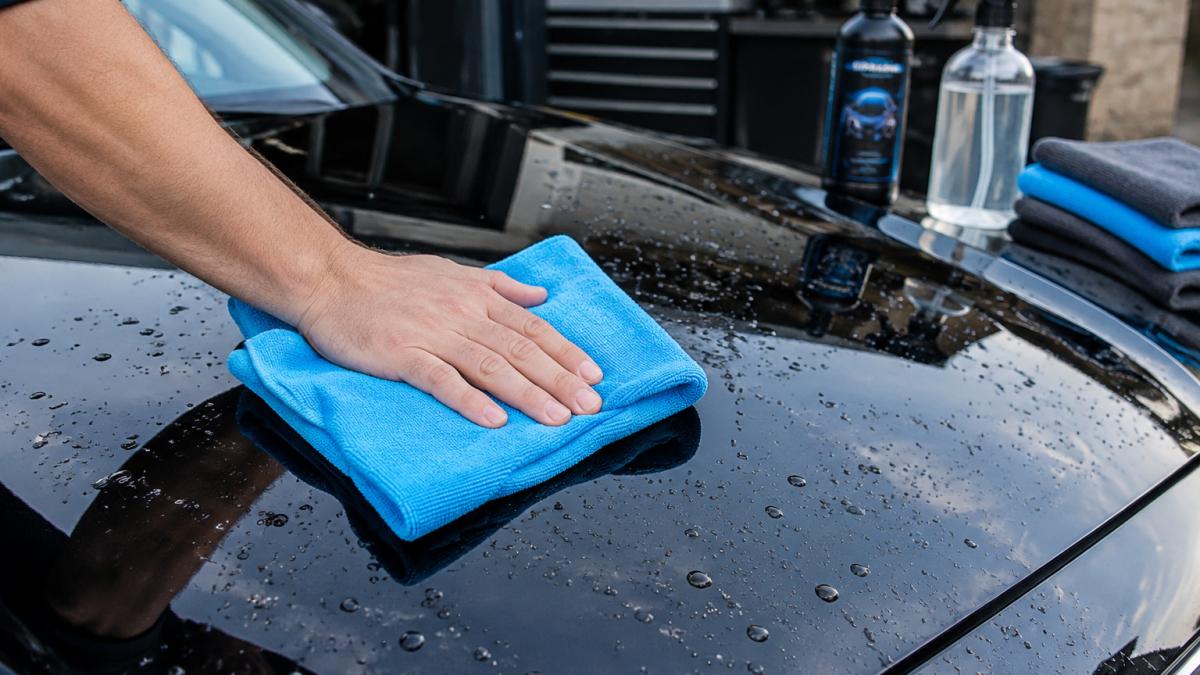
- Wash the vehicle. Use a pH-neutral shampoo and rinse thoroughly. Work in shade and on a cool surface.
- Test first. Choose a small area, such as a lower panel, and apply a small amount of coating-compatible remover or diluted vinegar.
- Apply the product. Spray lightly and let it dwell only as long as the label recommends. Do not let it dry on the paint.
- Agitate gently. Use a soft microfiber towel with light pressure. Stop if the spot does not respond.
- Rinse thoroughly. Flush the area with clean water to remove all product residue.
- Dry completely. Use a clean, dry microfiber towel. Check for remaining spots under good light.
- Repeat only if needed. Limit each attempt. Several gentle passes are safer than one harsh treatment.
Expected result: The spot should lighten or disappear without dulling the finish.
The removal process follows a clear sequence, with a test and a rinse at key points.
| Step | What to do | Timing |
|---|---|---|
| Wash the vehicle | Use pH-neutral shampoo, rinse thoroughly | Work in shade, cool surface |
| Test first | Try remover on a small lower panel area | Before full treatment |
| Apply the product | Spray lightly, do not let it dry | Dwell only as label recommends |
| Agitate gently | Soft microfiber, light pressure | Stop if spot does not respond |
| Rinse thoroughly | Flush with clean water | Remove all residue |
| Dry completely | Clean, dry microfiber, check under light | Before inspecting |
| Repeat only if needed | Several gentle passes, not one harsh one | Limit each attempt |
Water Spots Under Ceramic Coating and What to Do If the Finish Is Weakened
Sometimes a spot remains after treatment, or the finish looks dull or patchy. This can mean the coating has been weakened or partly removed. Stop treatment and inspect the area closely.
Signs of a weakened coating include:
- Spots that return quickly after cleaning
- Uneven gloss or hazy patches
- Water no longer beading in the affected area
- Rough texture after drying
If you see these signs, avoid further chemical treatment. A professional assessment can determine whether the coating can be restored or needs reapplication. Guardian Automotive Coatings offers inspection and protection review options to help you decide the next step, and you can also read about why coatings can fail in desert heat before deciding.
Preventing Mineral Spots on Your Next Wash
Prevention saves you time and protects the coating. Try these habits:
- Wash in the shade or early in the morning
- Dry the vehicle promptly with a clean microfiber towel
- Use a spray-on quick detailer between washes
- Consider a water softener or inline filter if your water is very hard
- Keep sprinklers away from parked vehicles
Regular maintenance matters too. If you want to understand whether a protective coating can be reapplied to keep spots from returning, that guide covers the options in more detail.
Booking a Professional Inspection and Protection Review With Guardian
If you are unsure whether your coating is intact, or spots keep coming back, a professional review can give you a clear answer.
Pricing depends on vehicle size, condition and the work needed, so the most accurate figure comes from a direct quote. Visit the Guardian Automotive Coatings website to request one.
Ready to protect your finish? Get a quote from Guardian Automotive Coatings and keep your paint looking its best.
Frequently Asked Questions
How do you get mineral deposits off car paint?
Start with the gentlest method. Wash and dry the area, then apply a coating-compatible mineral deposit remover or a diluted mild acid such as white vinegar to a microfiber towel, not directly to the paint. Let it dwell briefly, wipe gently, and rinse thoroughly. Always test on an inconspicuous panel first. Fresh spots often lift in one pass, while older deposits may need several light attempts. If spots remain after a few careful tries, stop and have a professional evaluate the surface rather than increasing the strength of the chemical.
Will vinegar damage a ceramic coating?
Diluted white vinegar is a mild acid and is often used on coated paint, but it is not automatically safe. Dilution, dwell time, temperature and how long it sits on the surface all affect the result. Using it on a hot panel or leaving it to dry can strain the coating. Test a small area first, keep contact brief, rinse completely and dry the panel. If you are unsure about your coating's tolerance, a coating-compatible remover is the lower-risk choice.
Can water spots form under a ceramic coating?
Yes. Mineral residue can sit on or within the coating's surface after water evaporates, especially when hard water is left to dry in sunlight or heat. Under Arizona conditions, spots can form quickly. Fresh deposits usually respond to a gentle remover and proper rinsing. Deeper marks that remain after cleaning may indicate etching in the clear coat, which requires a different assessment and often professional correction.


